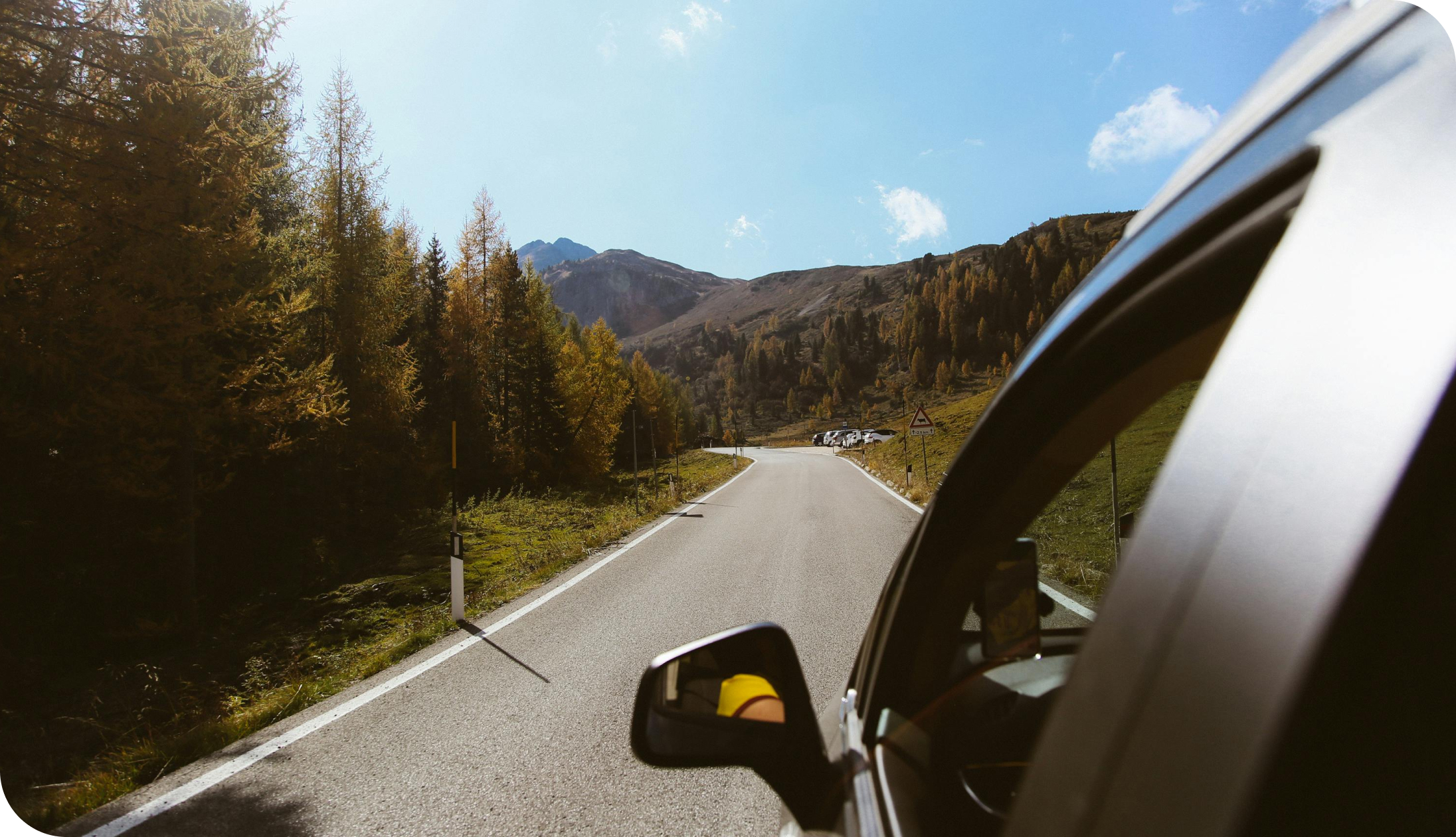


Hiring a car in Italy opens up a world of adventure, from cruising the Autostrade between iconic cities to slipping off onto smaller countryside roads where the best views (and the best lunch stops) are found.
With a car hire in Italy, you’re not tied to train schedules or limited day tours; you can build your trip around scenic drives, lakeside villages, vineyard routes and coastal roads. But before you hit the road, it’s crucial to understand the local Italy driving rules and prepare the right documents.
Here are some tips on the legal requirements (licences, insurance and essential paperwork), Italy’s key driving laws, everyday road rules, local driving habits, and other useful tips specifically for UK travellers, especially if you’re driving in Italy for the first time.
By the end, you’ll feel prepared to hire a car in Italy with confidence, including renting a car in Rome if that’s part of your plans, and you’ll see how Gigasure’s Car Hire Excess Insurance for Italy can help give you added peace of mind on the road.
Licence Requirements for Driving in Italy (ID, Permits, Age)
Valid driving licence
The minimum driving age in Italy is 18 years old. For visitors from the UK, your UK photocard driving licence is accepted for tourist driving in Italy, so if you’re driving in Italy with a UK license on holiday, you can generally drive just as you would elsewhere in Europe.
That said, “driving” and “renting” are not always the same thing. While Italy’s minimum driving age is 18, many providers set a higher minimum age for hiring a car in Italy (often 21+), and drivers under 25 can face young driver surcharges or restrictions depending on the car rental company in Italy you book with.
IDP to drive in Italy (Do I need an international driving license for Italy?)
One of the most asked questions is: Do I need an international driving license for Italy? According to UK Government guidance, you do not need an International Driving Permit (IDP) to drive in Italy if you hold a UK photocard driving licence.
However, you might need an IDP to drive in Italy if you have:
- a paper UK driving licence, or
- a licence issued in certain territories (as listed by the UK Government), or
- a rental provider that insists on an IDP as part of its own terms and conditions.
Always carry ID (and keep it accessible)
Italian authorities can carry out roadside checks, and you may be asked to show identification. As a visitor, that means having your driving licence and passport available.
Keep both physical and digital copies of your key documents. Carry the originals safely in the vehicle and keep phone photos of your licence, passport and rental agreement. It’s a small habit that makes a big difference if anything goes missing or you need details quickly.
Rental Company Rules and Insurance Basics for Car Hire in Italy
Italy is a very popular place to hire a car, which means you’ll usually find plenty of choices at airports, major train stations and city locations. But popularity also means busy desks, strict rules and occasional surprises, especially around deposits, payment cards, and insurance add-ons.
Most rental firms require:
- a full driving licence (physical card),
- a passport or official photo ID, and
- a payment card in the main driver’s name, often a credit card to place a refundable security deposit/excess hold.
Extra drivers and who is allowed to drive
If someone else will share the driving, they must be added to the rental contract as an additional driver. Only named drivers are authorised to drive the vehicle, and in the event of an incident, this can make a major difference to how the rental company handles the claim.
Manual vs automatic
In Italy, manual cars are common. If you prefer an automatic, book early and ensure your reservation clearly states automatic transmission, particularly in summer and school holiday periods when supply can be limited.
Included insurance
Like most European car hire, cars usually include basic insurance arrangements, but there’s a crucial catch: the excess (deductible). The excess is the amount you can be liable for if the car is damaged or stolen, effectively the part you pay before insurance kicks in.
It’s important to check the damage/theft excess carefully, because it can be the maximum amount you’re on the hook for if something goes wrong.
Many rental desks then offer additional products to reduce or remove the excess (often called “Super CDW”, “full cover” or “zero excess”). These add-ons can be expensive per day, and they may still exclude common issues like tyres, windscreens, underbody damage, or key loss, exactly the kind of “small damage” risks that are common when driving in Italy’s tight streets and car parks.
Better insurance options
You are not obliged to buy the rental company’s add-on insurance at the desk. A smart alternative is to use standalone Car Hire Excess Insurance, which is designed to reimburse the excess you’ve paid to the hire company after a covered incident. Gigasure’s Car Hire Excess is positioned as a way to protect against high excess charges and cover common damage areas that can be excluded by standard rental policies.
Buying your excess insurance before you travel makes the rental desk experience far easier. You can confidently decline expensive daily upsells, while still protecting yourself against the big excess amount and common “small damage” pitfalls.
Essential Documents to Carry in the Car
When driving in Italy, make sure you have the following documents in the vehicle at all times, as you may need to show them at police checks or if you’re involved in an incident:
- Driver’s Licence: Your UK (or home) licence, and IDP if required. It should be the original physical licence, not just a photo.
- Passport: As a visitor, your passport is your official ID and should be carried with your licence.
- Car Rental Agreement: If you’re in a rental car, keep a copy of the rental contract in the glovebox. It proves you have permission to use the vehicle and outlines the insurance included.
- Insurance Info: For rentals, your contract usually demonstrates that the vehicle is insured. If you’ve purchased a separate cover, keep a digital copy of your policy certificate/policy number handy, too.
Road Rules in Italy
Driving in Italy is often straightforward once you understand the basics, but there are key differences and a few Italy-specific “watch-outs”. Here are the essentials:
Drive on the right
In Italy, traffic flows on the right-hand side of the road. This means you overtake on the left. If you’re driving in Italy for the first time, the easiest way to avoid mistakes is to build a simple mental rule: “right when you set off, right at roundabouts, right when you turn.”
Seatbelts
Seatbelts are mandatory. Ensure everyone is buckled up, including rear passengers.
Speed limits
Italy uses kilometres per hour (km/h). General limits for private cars commonly include:
- Built-up areas: around 50 km/h (sometimes higher if signed)
- Outside built-up areas: 90- 110 km/h, depending on the road
- Motorways: 130 km/h (and sometimes higher in limited cases, but always follow posted signs)
Mobile phones
Handheld phone use is prohibited; hands-free is permitted, but distractions still increase risk, especially in dense Italian city traffic.
Drunk Driving
Italy’s drink-driving limit for private vehicles is generally stated as 0.05% BAC, with stricter limits for certain drivers (such as new or professional drivers). Hence, it is advised to avoid drinking and driving.
Child Safety
Children under 150cm must be properly restrained in an appropriate child seat. Seat belts are compulsory where fitted (front and rear).
One reference notes that children travelling in foreign-registered cars must be secured according to the laws and requirements in force in their country of origin.
Practical safety tips:
- If renting a child seat, confirm availability at booking.
- Inspect it at pick-up: correct size, intact straps, clean buckles.
- If your child gets travel-sick, pack spare clothes and wipes in an accessible bag, not the boot.
Paying fines
If stopped for a traffic violation, guidance notes that on-the-spot enforcement and payment processes can apply, and carrying some cash can be useful. Italy's fine handling can surprise travellers because “on-the-spot” enforcement has specific rules for foreign vehicles.
Speeding fines can range widely depending on severity.
On-the-spot fines: what can happen
Italian traffic police can impose fines on the spot for traffic violations. For foreign-registered vehicles, a referenced rule states police can collect one quarter of the maximum fine on the spot, and must provide a receipt.
If you wish to contest the fine or refuse to pay immediately, the same guidance notes state that you may be required to deposit a guarantee (such as half the maximum amount) in cash or surety; refusal can lead to vehicle confiscation until paid.
Fine reductions by paying quickly
In some cases, a fine may be reduced by 30% if paid within five days, but this doesn’t apply to certain serious offences.
If you’re in a hired car
Camera-based fines (especially ZTL) often arrive later. The rental company may forward them and may add an admin fee. This is why your best “fine strategy” is prevention: conservative driving, ZTL avoidance, and careful parking.
Road Conditions and Driving Etiquette in Italy
Italy has one of the most extensive road networks in Europe, with major toll motorways (“Autostrade”) supported by a wide network of national, provincial and municipal roads. City congestion can be heavier in the north and in major urban areas, while some southern and rural areas may feel less crowded.
Tailgating
Tailgating is common on some roads. Don’t brake-check. Don’t speed up beyond comfort. Keep a safe pace, maintain your distance from the car ahead, and let faster drivers pass when safe.
Rural and mountain roads
- Expect blind bends, cyclists, and slow vehicles.
- Use lower gears on descents; avoid riding brakes.
- In winter regions, check for winter tyres or chains (especially if heading to alpine areas).
Horn usage
Horns should be used in moderation and not in urban areas except in emergencies; in rural areas, use may be required if circumstances need it.
Autostrade and how tolls work
Italy’s Autostrade are toll roads, and the toll depends on the distance travelled and the route operator. It can be tricky because multiple companies operate different stretches, and advise carrying cash because some toll points accept cards while others may not.
Tolls can be paid by cash or credit card, and mention electronic payment systems (such as Telepass) used on many motorways.
Fines in ZTL zones
Italy’s single biggest “rental car regret” for many travellers isn’t driving on the right, it’s accidentally entering a restricted zone.
Many larger Italian cities use ZTL (Zona Traffico Limitato) zones to reduce congestion in city centres, and these areas are monitored by traffic cameras; once your vehicle crosses into a ZTL, a ticket can be issued and forwarded.
ZTL areas also restrict non-residents at certain hours, and note the “ZTL Attiva” indicator concept (when active, do not enter).
Tailgating and assertive driving
Tailgating is common in Italy, and advises drivers not to panic, drive at a safe pace and let faster vehicles pass when possible.
Scooters and mopeds
Scooters and mopeds are a key hazard: they may pull out quickly and filter through gaps you wouldn’t expect in the UK. Defensive driving and frequent mirror checks are essential in Italian cities.
Parking etiquette in Italy
Parking in Italy varies by city, but the common colour-coding is: blue lines for paid parking, white lines for free parking (where allowed), and yellow lines for residents/authorised parking.
However, for some blue zones, a parking disk may be required, and that parking can be limited by time.
Italy-Specific Fuel Guide: Benzina, Gasolio & “Servito” vs Self-Service
Fuel is a surprisingly common stress point for travellers, especially when you’re returning the car full-to-full. Here’s the Italy-specific cheat sheet on fuels.
Benzina vs gasolio (petrol vs diesel)
Unleaded petrol is called benzina (sometimes shown as “Super senza pb”), and diesel may be labelled as diesel or gasolio (Italian word for diesel).
Servito vs self-service
Many petrol stations have:
- Self-service (you fill yourself up), and
- Servito (an attendant fills up for you), which typically costs more per litre.
After-hours many petrol stations become self-service only and may use an automatic payment machine for pre-payment before refuelling.
Note that stations along the Autostrade are often open 24 hours, while other stations may have limited hours and breaks around midday.
Tips for UK Travellers Driving in Italy
For foreigners taking on Italian roads, here’s a recap of UK-specific reminders to make driving in Italy with a UK license on holiday smoother:
Remember to drive on the right
This is the #1 habit change. Quiet roads are where UK drivers slip back into left-side instinct, so use a simple dashboard note or say “right side” each time you set off.
KM/H, not MPH
Speed limits are in kilometres per hour. Build a quick mental conversion for the main limits (50/90/130 km/h) and keep an eye on signage, especially when leaving towns.
ZTL avoidance is your “Italy-specific skill”
ZTL zones are the biggest Italy-specific risk for tourists and rental cars. Plan parking outside historic centres and walk in, or use public transport for city sightseeing days.
Carry cash as a backup
Cash is still very common in Italy, particularly in rural areas. Cash can also help at toll points, older parking machines, or unattended fuel stations.
Emergency number
112 is the Europe-wide emergency number and works in Italy.
Gigasure’s Car Hire Excess Insurance for Italy
Hiring a car gives you freedom, but the excess can turn small incidents into big bills. Even careful drivers can pick up minor damage in Italy’s tight streets and car parks, and rental agreements can contain exclusions around tyres, windscreens, underbody and keys.
Gigasure’s Car Hire Excess is designed to help protect travellers from these excess charges.
Benefits of buying Car Hire Excess Insurance (Italy travellers)
- Financial Protection: Gigasure’s car hire cover is designed to protect you from excess charges you’d otherwise pay after damage, theft or loss of a rental vehicle.
- Budget-friendly: Gigasure positions its excess cover as a more cost-effective alternative to daily rental desk waivers, while still addressing common real-world damage risks.
- Travel with ease: Having excess cover in place helps reduce the “what if I crash it?” stress, particularly helpful when you’re navigating scooters, narrow streets and multi-storey car parks.
- Flexible Coverage: Choose single-trip or annual multi-trip cover depending on how often you travel.
What’s covered
Gigasure’s Europe Car Hire Excess cover highlights include:
- Misfuelling covers up to 2,000
- Excess protection up to 10,000 (including common damage areas like tyres, windscreen and undercarriage)
- Covers up to 9 named drivers on a single rental agreement
- Annual multi-trip policies can offer up to 65 days of continuous cover per rental agreement
For the smoothest experience, arrange your cover before you travel so you can confidently decline expensive counter add-ons and still be protected from the high excess
Enjoy the Journey, and Final Preparations
Driving a car hire in Italy is one of the best ways to explore the country beyond the main tourist routes. You can go from lakes and mountains to vineyards and coastlines in a single trip, and the freedom to set your own schedule is unbeatable. With a little preparation around the rules, documents and ZTL zones, you’ll be set up for a safer, calmer and more enjoyable drive.
Before you set off, do a quick final check:
- Valid licence (and IDP if needed)
- Passport
- Rental contract and insurance info
- Fuel type confirmed (benzina vs gasolio)
- Sat-nav set with ZTL awareness
- Mirrors adjusted and “right-side driving” in mind
One more pro-tip: secure your car rental excess insurance in advance. Italy is stunning, but tight parking and unfamiliar road layouts mean small scrapes can happen to anyone. With excess cover in place, you won’t have to worry about a surprise bill spoiling your trip; you can focus on the fun of renting a car in Italy and enjoying the open road.
So, as you pack your bags and plan your itinerary, grab a quote for Gigasure’s Car Hire Excess Insurance for Italy. It’s quick and could save you a lot of money and hassle. Then you can drive off into the Italian sunshine with real peace of mind, knowing you’re protected.
Buon viaggio and enjoy every kilometre of your Italian road trip.