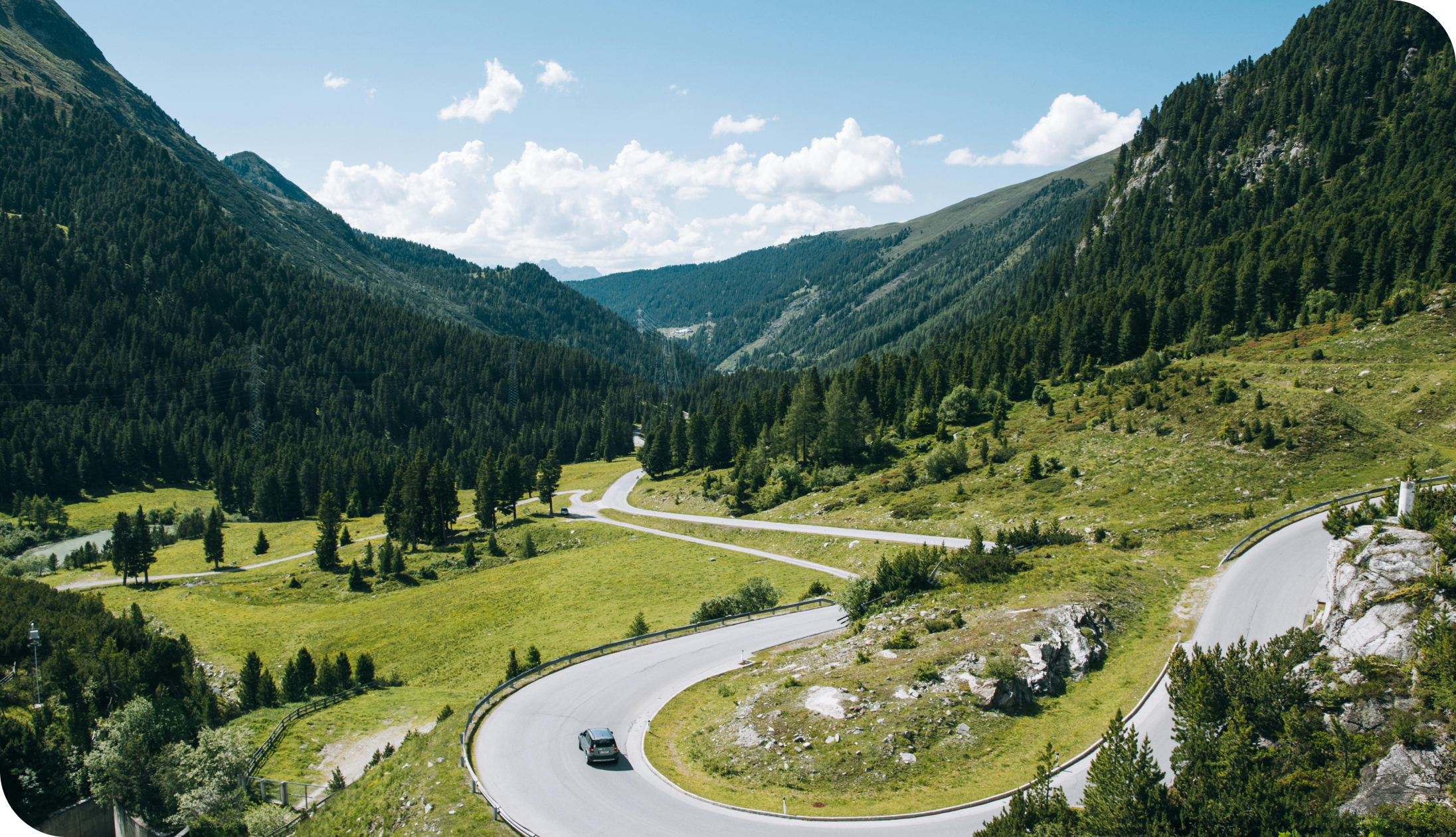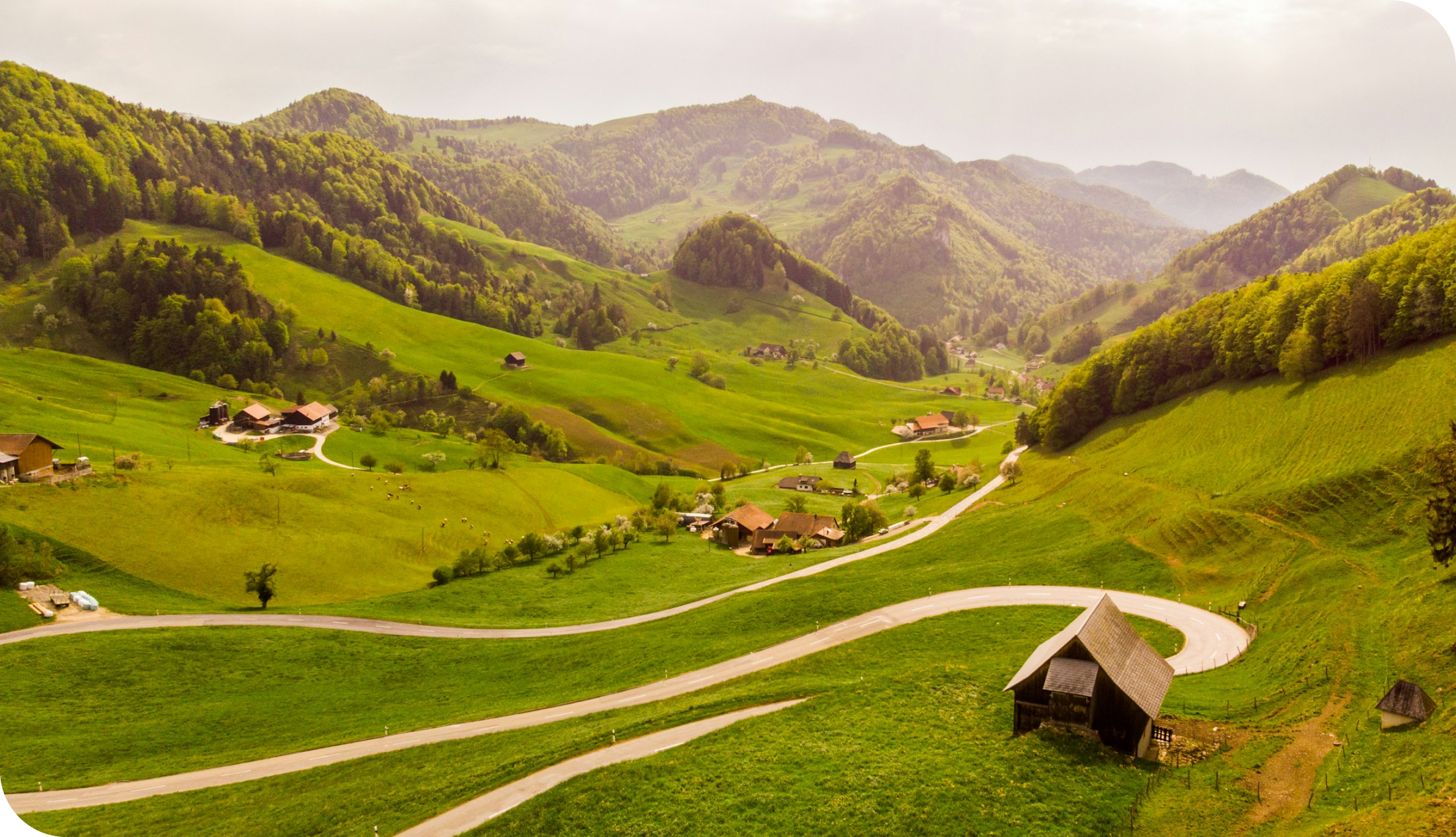


Hiring a car in Switzerland gives you the freedom to chase mountain passes, lakeside roads and villages that the trains never quite reach. Before you set off though, it pays to understand how Swiss driving rules work, what paperwork to carry, and, the part that catches most UK drivers out, how car hire excess in Switzerland leaves you on the hook for £1,000 to £3,000 if the car is damaged or stolen.
Here’s a walkthrough on everything a UK traveller needs, ranging from licence and age rules, the insurance the rental desk does and doesn’t include, the documents to keep in the car, the road rules that matter most, and local driving quirks from Alpine passes to blue-zone parking.
Licence and Age Requirements for Driving in Switzerland
-
Your driving licence: a full UK photocard licence is accepted in Switzerland for visits, so you do not need an International Driving Permit (IDP) for a holiday. If you only hold an older paper licence, carry an IDP as backup, as some hire firms ask for one.
-
Minimum age: the legal driving age is 18, but rental companies usually set their own minimum at 20 or 21, and most charge a young-driver surcharge for drivers under 25. A few apply upper age limits or extra checks for drivers over 70; check the terms when you book.
-
Non-EU/UK licences: if you are visiting from outside the UK or EU, you may need an IDP alongside your home licence. Confirm with the rental company before you travel.
-
Always carry ID and insurance papers: keep your licence, your passport and your rental agreement in the car. Swiss police carry out roadside checks, and the rental agreement is your proof that the car’s basic insurance is in place.
Travel Tip: Keep both physical and digital copies of your key documents. Carry the originals in the car and save photos of your licence, passport, rental agreement and excess insurance certificate on your phone, so you can produce them quickly if asked.
Car Hire in Switzerland: Hire Company Rules and Insurance Basics
Renting a car, what to know
The process is straightforward, but a few details are worth checking. You will need a credit card in the main driver’s name for the security deposit, and only drivers named on the agreement may legally drive. Adding an extra driver is usually a small daily fee. Manual cars are the norm, so reserve an automatic in advance if you need one.
Confirm the fuel policy (usually full-to-full) to avoid refuelling charges, and note that mountain or unpaved roads are sometimes excluded from the rental terms. For the basics that apply wherever you go, our guide to hiring a car abroad is a useful primer.
The insurance that comes included
By law, every Swiss rental includes third-party liability, and the rate normally includes a basic Collision Damage Waiver (CDW) and theft protection. The catch is the excess.
CDW does not make you free of charge; it caps your liability at the excess, which in Switzerland commonly runs from £1,000 to £3,000, and higher on larger or premium vehicles.
When you collect the car, the rental company places a hold on your credit card for that amount. If the car is damaged, even slightly, you lose it, or the repair cost up to that limit, unless you have separate cover to claim it back.
Why Swiss claims add up
Labour and parts cost more here than in much of Europe, and a lot of driving happens on narrow Alpine roads and tight village streets where chips, scrapes and kerbed wheels are easy to pick up.
A cracked windscreen from a stone on a mountain pass, or a scuffed alloy against a kerb in an old town, can run to several hundred francs, and under basic cover, that comes straight out of your excess.
The desk waiver can be expensive and inconsistent
At the counter, the agent will push an upgrade to reduce or remove the excess, variously called Super CDW (SCDW), excess waiver or “zero excess.” It works, but it is priced by the day and adds up fast, sometimes as much as the rental itself on a longer trip. Worse, these waivers often still exclude the parts most likely to be damaged:
-
Tyres and wheels
-
The windscreen and other glass
-
The roof and undercarriage
-
Wing mirrors
-
Lost or damaged keys
On Alpine roads, those are exactly the things that get hit, so you could pay a steep daily fee and still face a bill for a chipped windscreen or a kerbed alloy.
How a claim works with CDW vs excess vs your policy
Think of it as three layers. The Collision Damage Waiver caps what you owe; the excess is what is left for you to pay under that cap, and a standalone excess policy reimburses that excess.
With a standalone cover, the rental company still charges the excess to your card if there is damage, and you claim it back afterwards with the repair invoice and photos.
With the desk waiver, the rental company simply does not charge you, so if you would rather not be out of pocket even briefly, factor that in. For most trips, the savings make a standalone policy the better call.
Essential Documents and Equipment to Carry in the Car
Keep the following in the vehicle at all times. Swiss police carry out roadside checks, and you will need these if you are involved in an incident:
-
Driving licence: your physical UK photocard licence (plus an IDP if your licence type needs one).
-
Passport: as a visitor, this is your primary photo ID.
-
Rental agreement: usually kept in the glovebox; it proves you may use the car and sets out the included insurance.
-
Insurance details: the rental agreement covers the car’s basic insurance; if you hold a standalone excess policy, keep a printout or digital copy of the certificate handy too.
-
Motorway vignette: the sticker (or e-vignette) that lets you use motorways; most hire cars already have one, but check at pickup (see below).
-
Safety equipment: a warning triangle is compulsory and should be in the car; check the boot at pickup. A reflective hi-vis vest is strongly recommended. If you bring your own UK car, fit headlamp beam deflectors so you do not dazzle oncoming traffic.
Rules of the Road in Switzerland: What UK Drivers Need to Know
Swiss roads are well-maintained and clearly signed, but there are key differences from the UK to keep in mind:
Drive on the right: traffic drives on the right, and you overtake on the left. Most hire cars are left-hand drive, so take a moment to get used to the controls and the car’s width before setting off.
Motorway vignette: you need a CHF 40 vignette (about £35) to use Swiss motorways and expressways. It is an annual sticker or e-vignette, valid from 1 December to 31 January the following year. Most hire cars already have one; check at pickup. Driving without it risks a CHF 200 fine plus the cost of the vignette.
Speed limits (in km/h): strictly enforced by a camera. The standard limits are:
-
120 km/h on motorways
-
100 km/h on semi-motorways (expressways)
-
80 km/h on main roads outside built-up areas
-
50 km/h in towns, dropping to 30 km/h or 20 km/h in marked zones
Heavy fines: Switzerland has some of Europe’s steepest penalties, and serious speeding can be charged as a criminal offence with fines linked to income. Driving in the conditions on Alpine roads, the safe speed is often well below the posted limit.
Headlights: dipped headlights or daytime running lights are compulsory at all times, day and night, all year round.
Drink-driving: the limit is low at 0.05%, and 0.01% for new and professional drivers. Even one drink can put you over. Enforcement is robust, and penalties are severe.
Seatbelts and children: Seatbelts are mandatory in all seats. Children under 12 and shorter than 150 cm must use an appropriate child seat or booster; reserve one with the rental company in advance.
Mobile phones: using a handheld phone while driving is illegal. Set up navigation hands-free, in a mount, before you set off.
Tunnels: Switzerland has many long Alpine tunnels. Keep dipped headlights on, hold your distance, and follow the lane signals.
Road Conditions and Driving Etiquette in Switzerland
-
No tolls, just the vignette: Switzerland has no pay-as-you-go motorway tolls; the annual vignette covers the whole network, though a few major tunnels charge separately.
-
Mountain passes: expect hairpins and long descents. Use a low gear downhill, and on narrow stretches, uphill traffic has priority.
-
Give way to the PostBus: on mountain roads, the yellow PostBus has right of way, often announced by its three-note horn before a blind bend.
-
Winter driving: hire cars usually have winter tyres in the cold months, confirm it. Carry snow chains for the Alps, and check whether a high pass has closed before routing over it.
-
Cities, trams and parking: in Zurich, Geneva, Bern and Basel, trams have priority. Blue-zone bays need a parking disc (usually in the car); yellow markings mean no parking.
-
Fuel: mostly self-service and card-friendly, many open 24 hours, at roughly CHF 1.80 - 1.95 a litre. Fill up before remote routes.
Tips for UK Travellers Driving in Switzerland
-
Keep reminding yourself to drive on the right: the trickiest moments are pulling out of a quiet junction or a car park with no traffic to cue you. A note on the dashboard helps for the first day or two.
-
Think in km/h: the speedometer reads in kilometres per hour. As a guide, 50 km/h is about 31 mph, 80 km/h is about 50 mph, and 120 km/h is about 75 mph.
-
Check the vignette is in the windscreen before you drive off — and that it is valid for your dates.
-
Photograph the car at pickup and drop-off from every angle, including the wheels, windscreen and roof, and get any existing damage noted on the paperwork. Clear records are what make an excess claim quick and straightforward.
-
Decline the desk waiver once you hold your own excess cover, but tell staff you have separate insurance.
-
Carry your GHIC: the UK’s Global Health Insurance Card covers medically necessary state healthcare in Switzerland on the same basis as residents. It is not a substitute for travel insurance, but it is a useful safety net. Check yours is in date.
-
Save the emergency numbers: 117 for police, 144 for an ambulance, and 112 as the Europe-wide emergency line. Note your rental company’s 24/7 roadside assistance number too.
-
Sort your excess cover before you travel: it is the one thing you can settle from home, and it is cheaper than buying at the desk.
Enjoy the Journey: Drive Switzerland with the Excess Sorted
Hiring a car is the best way to reach the lakes, passes, and mountain villages that public transport cannot reach, and Switzerland is built for driving. Get the documents in order, learn the handful of rules that differ from home, and the rest is the easy part, the views.
The excess is the one thing worth settling before you go. With £1,000 to £3,000 on the line and the most damage-prone parts often excluded from basic cover, a standalone policy turns a possible four-figure bill into a small, fixed cost.
You can arrange Car Hire Excess Insurance for Europe with Gigasure before you travel, Switzerland included, with up to £10,000 of excess protection and a choice of single-trip or annual cover. Pick up your car knowing a scrape or stone chip will not cost you the price of the holiday.
Have a good trip, and enjoy every mile of the Swiss roads.
Note: Information accurate as of June 2026. Excess amounts, waiver prices and driving rules vary by rental company and can change; always check your rental agreement and the latest Swiss driving rules (ch.ch) before you travel. Gigasure is a trading name of Gigasure Services Limited, authorised and regulated by the Financial Conduct Authority.