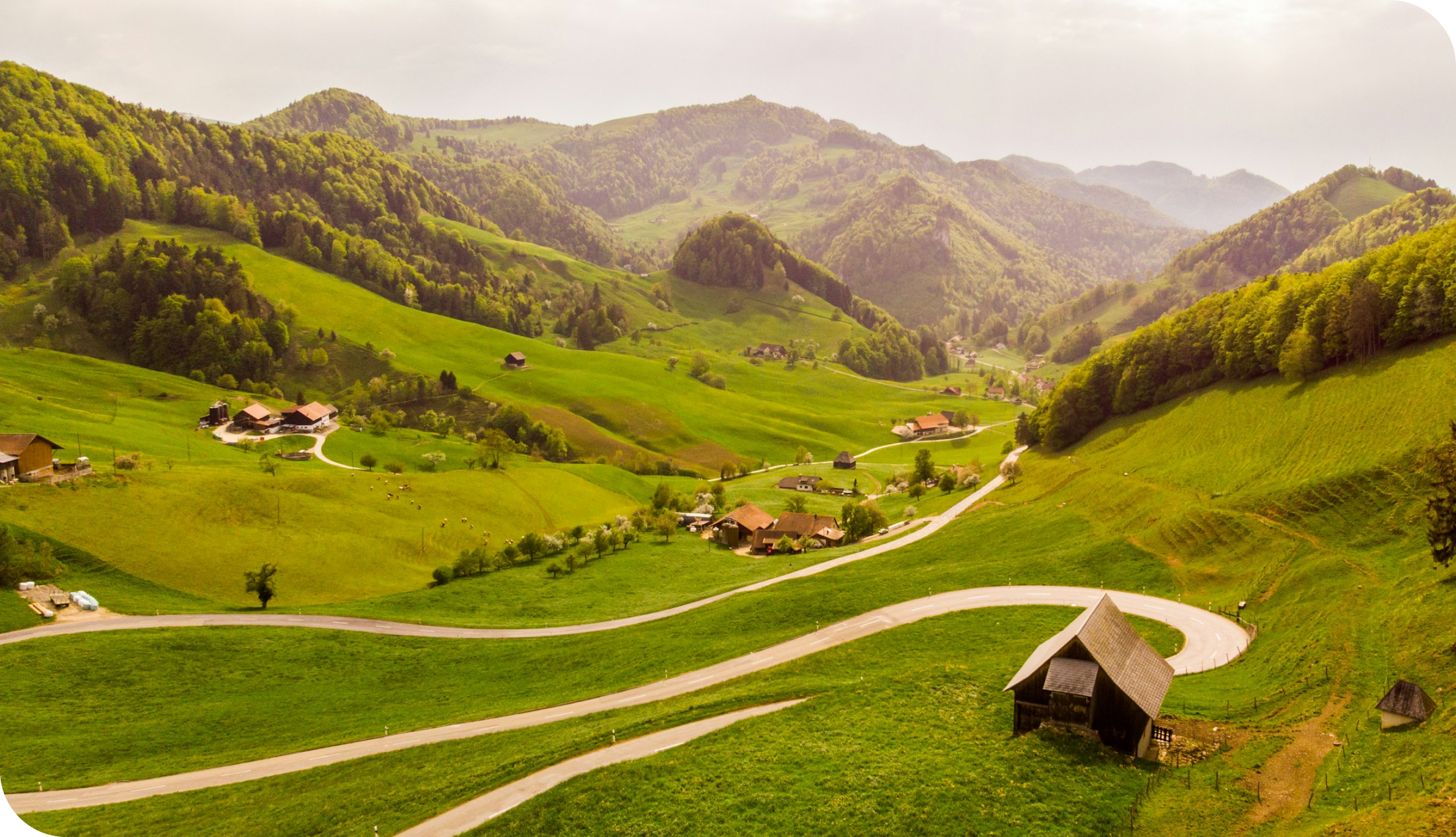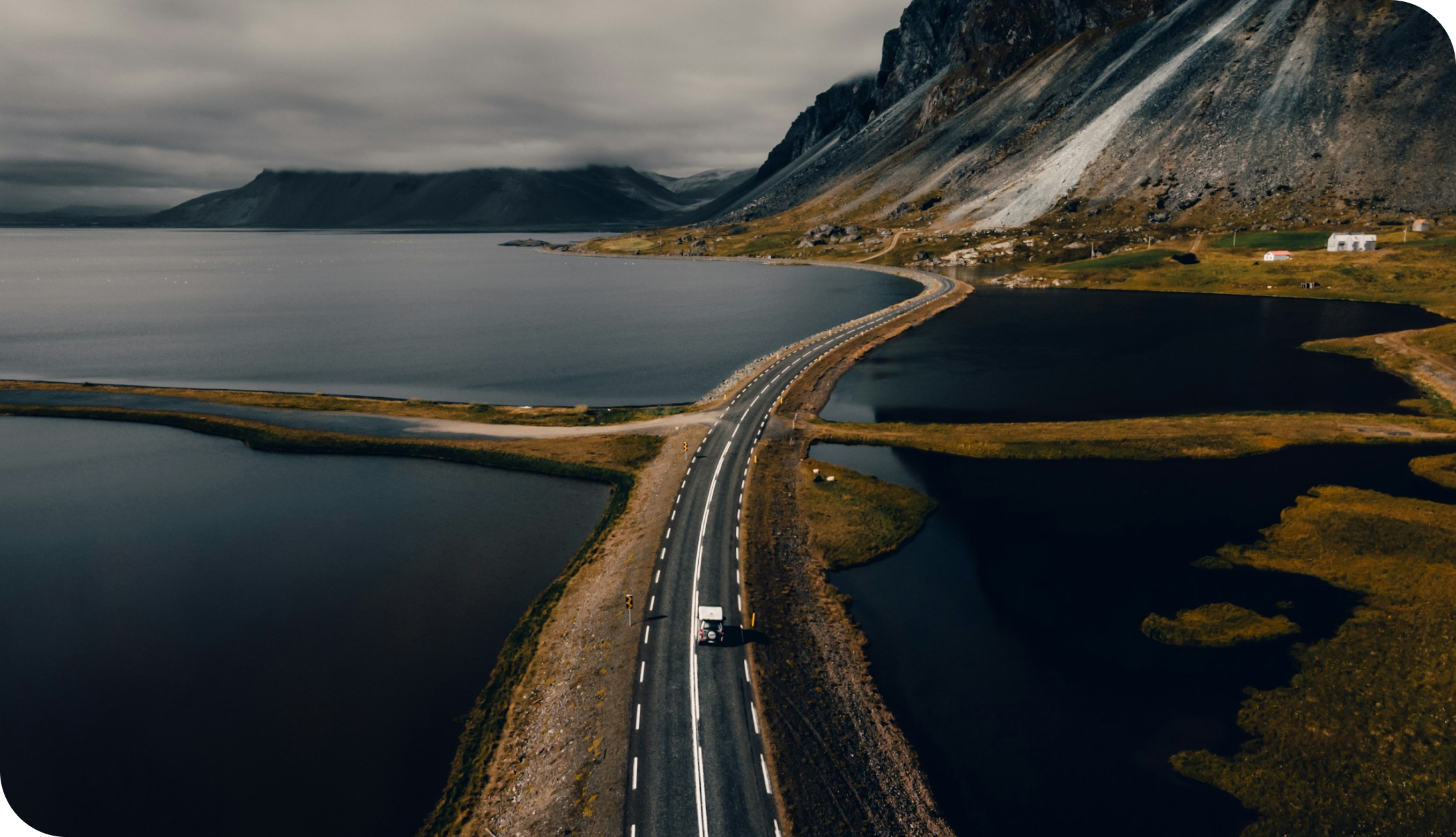


Iceland is built for a road trip. Route 1, the Ring Road, loops 1,332 kilometres around the island threading past glacier tongues, lava fields, black-sand beaches, fjords, and waterfalls that most countries would put on a stamp.
A hire car gives you the freedom that organised tours can't match. But Icelandic roads also produce some of the most expensive rental claims in Europe, and standard CDW leaves you exposed to almost every type of damage the island specialises in. Wind-driven volcanic ash, flying gravel, undercarriage hits on rough surfaces, or river-crossing damage on F-roads. None of it is covered by the policy bundled into your booking.
This guide covers what UK drivers need to know before they collect the keys: how collision damage waiver (CDW), super collision damage waiver (SCDW), sand and ash protection (SAAP), and gravel protection (GP) actually work. The F-road rule that voids your cover instantly, what to do about gravel and ash damage, and how Gigasure's Car Hire Excess Insurance can close the gaps for a fraction of the rental desk price.
Planning Your Car Hire in Iceland
A bit of pre-trip groundwork saves both money and grief at the rental desk in Keflavík.
Licence Requirements
- Your full UK photocard driving licence is accepted in Iceland for tourist trips.
- No International Driving Permit (IDP) is required. Bring the photocard and your passport for ID.
- If you hold a paper-only licence or one from Jersey, Guernsey, Gibraltar, or the Isle of Man, take an IDP as a precaution.
- Drivers from outside the UK, EU, and EEA must carry an IDP alongside their home licence.
What Documents Do You Need at the Rental Desk?
At pick-up, usually Keflavík Airport, you'll need:
- Full UK Driving Licence: Photocard (plus paper counterpart if applicable).
- Passport: Your primary ID at the desk and during any police check.
- Credit Card in the Main Driver's Name: Required for the excess pre-authorisation hold. Debit cards are sometimes refused; confirm in advance.
- Booking Confirmation: A printed or clearly accessible digital copy.
- Proof of Independent Insurance: If you've bought cover separately, have the policy document ready.
Age Restrictions and Young Driver Fees
The minimum age to hire a car in Iceland is 20 for standard cars and 23 for 4x4s and larger vehicles. Drivers under 25 face surcharges of around ISK 1,000 - 1,500 (roughly £6 - £9) per day at most companies. Some firms refuse luxury or specialist 4x4 hires to anyone under 25, regardless of surcharge. Upper age limits are mostly relaxed to 75, with some restrictions beyond.
Quick-Glance Iceland Car Hire Planning Table
|
Detail |
What to Expect in Iceland |
|
Minimum age (rental) |
20 (4x4: 23+) |
|
UK licence accepted |
Yes, photocard only |
|
IDP needed for UK drivers |
No |
|
Driving side |
Right |
|
Speed limit (paved rural) |
90 km/h |
|
Speed limit (gravel rural) |
80 km/h |
|
Speed limit (urban) |
50 km/h |
|
Drink-drive limit (BAC) |
0.02% - a strict zero tolerance policy in practice |
|
Emergency number |
112 |
|
Currency |
Icelandic Króna (ISK) |
|
Headlights |
Required at all times, day and night |
|
F-roads |
4x4 only, June - September only |
Understanding Car Hire Excess in Iceland
Basic rental insurance covers far less of what actually happens on Icelandic roads than the headline figures suggest.
What is CDW, and What Does It Cover?
Collision Damage Waiver (CDW) is the baseline insurance included with every car hire in Iceland. It limits your liability for collision damage to the body of the car, but it leaves a high excess in place, typically ISK 200,000 - 500,000 (roughly £1,200 - £3,000) for standard cars and significantly more for 4x4s and luxury vehicles.
CDW does not provide full cover. It covers a body panel dent from a parking knock; it does not cover the windscreen crack from a stone flicked up by an oncoming truck.
What CDW Typically Does NOT Cover
The small print matters here because the headline "fully insured" claim hides a significant list of exclusions. Standard CDW in Iceland usually leaves you exposed to:
- Sand and ash damage (requires SAAP)
- Gravel chips and windscreen damage (requires GP)
- Tyre punctures, sidewall damage, and rim damage
- Undercarriage damage from rough surfaces or river crossings
- Roof damage
- Interior damage, lost keys, and misfuelling
- F-road damage in a non-4x4 vehicle
- Off-road driving and river crossings
These exclusions cover the majority of real-world claims while you're driving in Iceland.
What is SAAP (Sand and Ash Protection)?
SAAP (Sand and Ash Protection) covers damage caused by wind-driven volcanic sand and ash, which can strip paint, etch glass, and sandblast a car's exterior in minutes. South Iceland, Vík, Höfn, and the area east of Eyjafjallajökull are particularly exposed.
SAAP is not included in basic CDW or most SCDW packages. It's sold as a separate desk add-on for around £5 - £15 per day. Damage from a single ash storm can easily run to thousands of pounds.
What is GP (Gravel Protection)?
GP (Gravel Protection) covers damage caused by gravel and stone chips, particularly windscreen cracks and underbody damage. Two-thirds of Iceland's secondary roads are unpaved, and gravel chips are the most common rental claim type in the country. GP is sold separately at the desk for around £5 - £10 per day and is not included in basic CDW.
Tyre and Glass Cover
A significant number of rental packages don't include tyre or glass cover at all, meaning a punctured tyre or stone-chipped windscreen comes out of your pocket entirely. Check the agreement at pick-up to see if this is charged separately from the excess. Some companies sell tyres and glass as a separate add-on (around £3 - £5 per day); others bundle it into SCDW.
Independent Car Hire Excess Insurance
Independent Car Hire Excess Insurance is a UK-bought policy that reimburses the excess your rental company charges if the car is damaged or stolen. Most policies also cover the items basic CDW excludes, glass, tyres, undercarriage, roof, lost keys, and misfuelling. Some Iceland-specific policies extend to sand, ash, and gravel damage too. Always check the wording before you buy.
Independent cover typically costs £3 - £8 per day for single-trip policies, with annual policies cheaper per day if you hire more than once a year. That's often two-thirds less than a full desk bundle for equivalent or better protection.
The trade-off: you pay the rental company first if damage occurs, then claim back from your independent insurer. The reimbursement process is straightforward, and the savings on a 10-day trip are usually considerable.
Planning a trip?
Arrange your Car Hire Excess Insurance for Europe before you fly. It's far cheaper than buying protection at the rental desk, often offers broader coverage, and gives you the confidence to decline the counter upsell.
Cover Comparison: Desk vs Independent
|
Cover Type |
What It Covers |
What It Misses |
Typical Daily Cost |
|
Basic CDW (included) |
Collision body damage above the excess |
Sand, ash, gravel, glass, tyres, undercarriage, F-roads |
Included |
|
SCDW (desk upsell) |
Reduces excess; some additional cover |
Usually excludes SAAP, GP, F-roads |
£10 - £20 |
|
SAAP (separate add-on) |
Sand and ash damage |
Gravel, undercarriage, F-roads, river crossings |
£5 - £15 |
|
GP (separate add-on) |
Gravel chips, windscreen |
Sand, ash, F-roads, river crossings |
£5 - £10 |
|
Zero Excess Bundle (desk) |
All of the above; excess zero or near-zero |
F-roads in non-4x4, river crossings, off-road |
£25 - £50 |
|
Independent Excess Insurance (e.g. Gigasure) |
Excess plus glass, tyres, undercarriage; some policies include SAAP/GP |
F-road damage in non-4x4, river crossings, deliberate misuse |
£3 - £8 |
Driving Laws & Rules in Iceland
Iceland's road laws are strictly enforced. Here's what you need to know before you set off.
Drive on the Right
Iceland drives on the right-hand side of the road. For UK drivers, this is the biggest adjustment of the trip. The most common mistake is drifting left at junctions and after fuel stops. Pay extra attention to correct your instincts, particularly on quiet rural roads where there's little traffic.
Speed Limits
Speed limits are posted in kilometres per hour. Standard limits across Iceland are:
- 90 km/h on paved rural roads
- 80 km/h on unpaved (gravel) rural roads
- 50 km/h in urban areas
- 30 km/h in residential zones
Speed cameras are common around Reykjavík and on Route 1 approaches. Fines range from ISK 5,000 - 250,000 (£30 - £1,500) and are payable to the police or via the rental company on return.
Drink-Drive Limits
Iceland enforces a 0.02% BAC limit, but in practice operates on a near-zero-tolerance basis. Even one drink can put you over. Penalties include licence suspension, large fines, and possible imprisonment for serious offences. To stay safe avoid alcohol entirely if you plan to drive.
Mobile Phones, Seatbelts, and Headlights
Handheld mobile phone use while driving is illegal; fines start at around ISK 40,000 (£235), however, hands-free use is permitted. Seatbelts are compulsory for all occupants. Children under 36kg must use an approved child seat or booster.
Headlights must be on at all times, day or night, summer or winter. This is one of the most commonly fined infractions for foreign drivers. Most Icelandic hire cars have automatic daytime running lights, but check yours before you set off.
Off-Road Driving Is Illegal
Driving off marked roads or tracks anywhere in Iceland is a criminal offence. The fragile volcanic vegetation takes decades to recover from a single tyre track. Penalties include fines, vehicle impoundment, and prosecution, and your insurance is voided entirely.
F-Roads: The 4x4 Rule
F-roads are highland routes prefixed with the letter F on Icelandic maps (F26, F35, F88, and so on). They are legally restricted to four-wheel-drive vehicles. Driving an F-road in a 2WD car is illegal, voids your rental insurance completely, and exposes you to the full repair or replacement cost of the vehicle.
F-roads also include river crossings and are only open seasonally, typically mid-June to mid-September, depending on conditions. The Icelandic Road Administration publishes daily opening status at vegagerdin. Driving an F-road outside the official open period is also illegal.
If you want to access the highlands, Landmannalaugar, Þórsmörk, and Askja, you need a proper 4x4 hire with F-road permission written into the agreement.
Must-Know Local Tips for Driving in Iceland
The practical, on-the-ground things guidebooks tend to skip.
The Ring Road vs the Interior - Two Different Trips
Route 1 (Ring Road) is paved, well-maintained, and accessible year-round in most weather. A standard 2WD economy car handles it fine in summer. Winter requires studded tyres (legally required December - April depending on conditions) and readiness for snow, ice, and sudden weather changes.
The interior is Iceland’s rugged volcanic highland region, accessed mainly by F-roads. F-roads, river crossings, no petrol stations for hundreds of kilometres, no mobile signal in many areas, and weather that can close routes within hours. The interior is not accessible most of the year and restricted to summer-only. You are also required to have a 4x4 vehicle, and requires careful planning. It is a very different trip from the Ring Road.
Avoid River Crossings
Crossing rivers in a hire car is not permitted under any standard rental agreement. Damage from a river crossing is excluded from CDW, SCDW, SAAP, GP, and independent excess insurance. If you submerge the engine or undercarriage, you pay for the entire car.
If your route includes river crossings, hire a specialist vehicle from a company that explicitly permits them and arrange the cover separately. Otherwise, treat any unbridged river as a turnaround point.
Gravel Chip Avoidance
Two-thirds of Iceland's road network is unpaved. Most foreign-driver claims involve windscreen chips and underbody damage from gravel. Reduce the risk by:
- Slowing significantly when oncoming vehicles approach, the gravel they throw up is the main hazard
- Avoid overtaking on gravel where possible
- Not driving fast on washboard surfaces, gravel wears tyres and chips paint quickly at speed
Weather Windows
Iceland's weather can rewrite your itinerary within hours. Wind speeds above 20 metres per second can be strong enough to rip car doors off their hinges. Opening a door into the wind is a recognised claim type. Wind, snow, ice, and ash all close roads regularly.
Check vegagerdin (road conditions) and vedur (weather) every morning before you set out. If a yellow or red wind warning is in place, postpone. No view is worth a car-door-replacement bill.
Fuel Stops on Remote Routes
Some stretches of the Ring Road, particularly between Höfn and Egilsstaðir and on the West Fjords, have gaps of 100 kilometres or more between fuel stations. Fill up when you can, not when you need to. Many stations close after 8 pm; some require a Visa or Mastercard at the pump after hours.
Sheep, Reindeer, and Wildlife
Free-roaming sheep are everywhere in summer and wander onto the road without warning. Reindeer in the east are larger and more dangerous. Collision damage with livestock is usually covered by CDW, but you may be liable to the farmer for the value of the animal. Drive slowly through livestock zones.
Protect Your Iceland Car Hire with Gigasure
Gigasure's Car Hire Excess Insurance reimburses the excess your rental company charges if your hire car is damaged or stolen, up to the limit stated in your policy.
Cover includes the items most likely to catch Iceland travellers out, damage to glass, tyres, roof, and undercarriage, plus lost keys and misfuelling. Both theft and collision are included.
For Iceland-specific risks such as sand and ash damage or gravel chips, read your policy wording carefully before you buy. Coverage of these items varies, and knowing the limits upfront avoids disputes later.
If specific add-ons aren't included in the standard policy, a desk car hire excess top-up can cover the gap, and you'll still save considerably against a full desk bundle.
Single Trip vs Annual Policy
For a one-off trip to Iceland, a single-trip policy is the most cost-effective option. If you hire two or more times a year, Iceland this summer, Greece next spring, Portugal in autumn, an annual policy typically pays for itself by the second trip and removes the admin of buying cover each time you book.
How Does Claiming Work?
- Pay the rental company the excess amount they charge for the damage.
- Gather your evidence: the rental company's damage report, the receipt showing the excess charged, the rental agreement, and photographs.
- Submit the claim through the Gigasure app.
- Reimbursement is processed once your claim has been reviewed and approved.
Final Thoughts
Driving Iceland's Ring Road is one of the greatest road-trip experiences on earth, and Route 1 will reward every kilometre you put under your tyres. The only real risk is financial; Icelandic roads produce expensive claims, and standard CDW leaves most of them sitting with you.
Sand and ash, gravel chips, F-road exclusions, river crossings, the gaps in basic rental cover are wider in Iceland than almost anywhere else in Europe. Independent car hire excess insurance is one of the cheapest pieces of trip admin you'll do, and one of the few that genuinely pays for itself the moment something goes wrong.
Before you fly, confirm you have your full UK photocard licence, passport, rental confirmation, credit card in the main driver's name, and proof of independent excess cover.
Then pack the licence, read the agreement, and go drive.
Compare single-trip and annual policies with Gigasure's Car Hire Excess Insurance and get sorted before you fly.
Safe travels, and enjoy every kilometre.