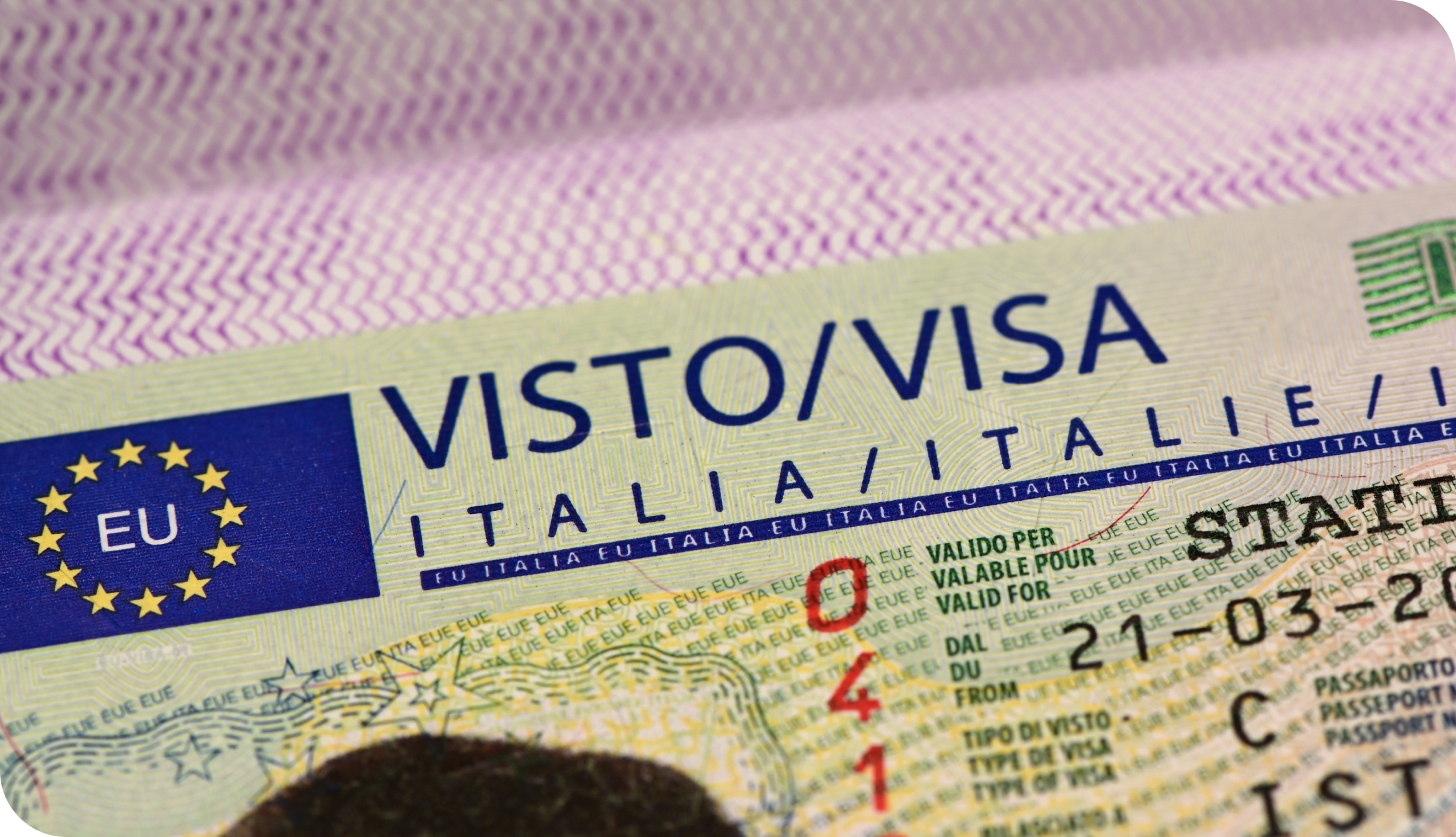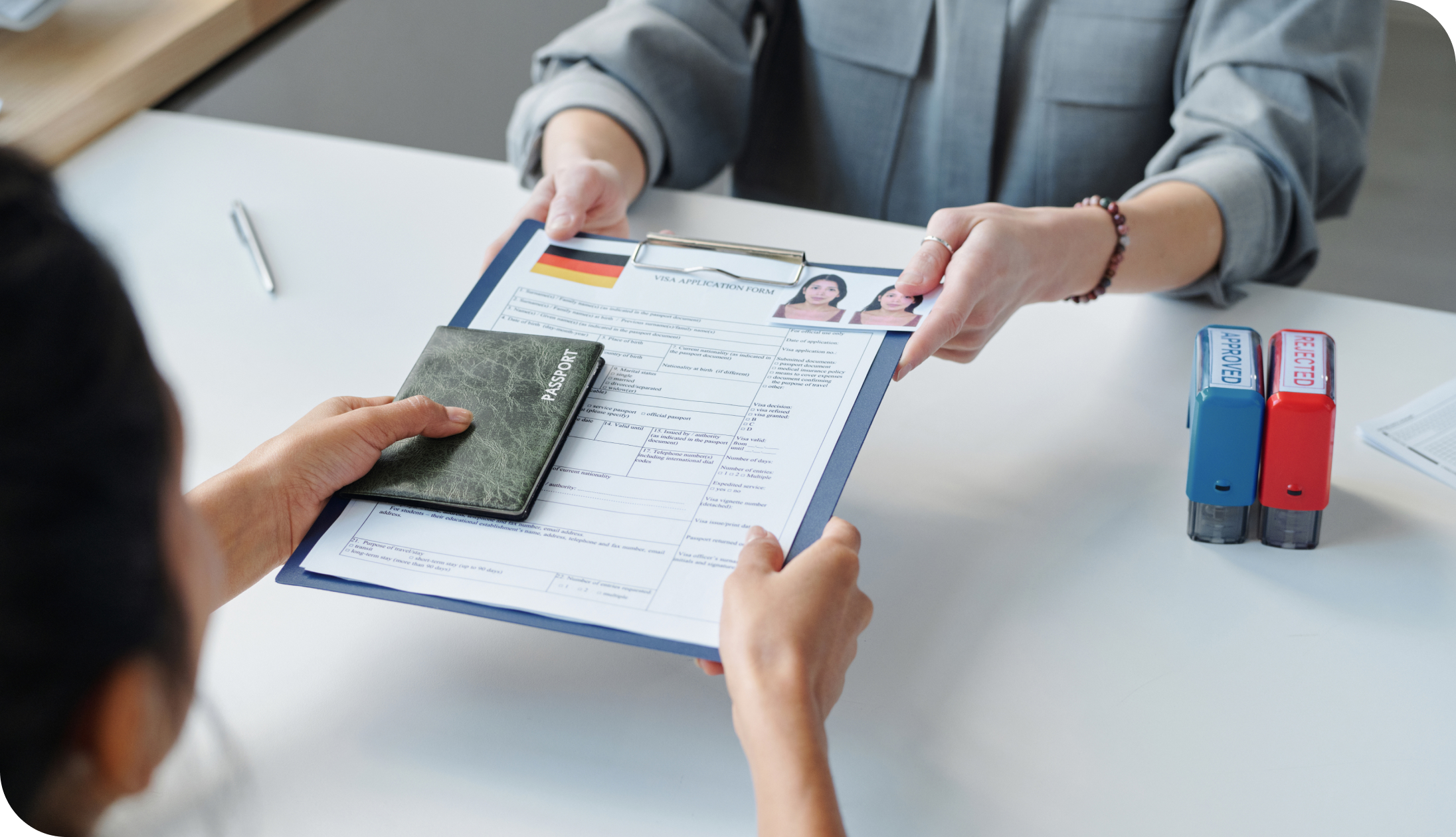


If your Denmark plans include a morning coffee on Nyhavn’s painted harbourfront, a cycle through Copenhagen’s design districts, or a day trip out to Kronborg Castle, the first question is the practical one. Do you need a Schengen visa for Denmark?
Denmark has been part of the Schengen Area since 2001, so short trips follow the standard Schengen short-stay (Type C) rules, up to 90 days in any 180 days, and the same “main destination” application logic used across the Schengen Area.
Whether you need a Schengen visa for Denmark comes down to your nationality, not where you live.
Do You Need a Schengen Visa for Denmark?
You need a Schengen short-stay visa (Type C) for Denmark if your passport is from a country whose nationals are not visa-exempt for Schengen travel. For people living in the UK, that covers most non-EU, non-British passport holders, a Type C visa lets you stay in the Schengen Area for up to 90 days in any 180 days.
Denmark’s official ApplyVisa guidance confirms that if you already hold certain valid Schengen documents, you may not need a separate Danish visa for a short stay. This includes, for example:
-
a uniform Schengen visa (Type C) for two or multiple entries, valid for all Schengen states, and
-
a residence permit issued by another Schengen member state.
Note: British passport holders do not need a Schengen visa for Denmark at all; short trips are visa-free for up to 90 days in any 180 days. Changes are coming through EES and ETIAS, but neither is fully in force yet.
What type of visa do you apply for?
Denmark issues the standard Schengen visa types. For most UK applicants, that means a Type C short-stay visa:
-
Type A: airport transit, for passing through an international transit zone without entering the Schengen Area.
-
Type C: short stay (tourism, business, private visit, short study or transit) for up to 90 days in any 180 days, issued for one, two or multiple entries.
First-time applicants are usually issued a single-entry visa. Under the Visa Code’s “cascade” approach, travellers with a clean Schengen history can be granted multi-entry visas valid for up to five years, though your UK residence permit’s expiry date can shorten that.
Does a Danish Schengen Visa Cover Greenland and the Faroe Islands?
No. Greenland and the Faroe Islands are part of the Kingdom of Denmark, but neither sits inside the Schengen Area or the EU, so a standard Schengen visa does not cover them. This catches a lot of travellers out.
If your trip includes Greenland or the Faroe Islands, note it on your ApplyVisa form, keep Denmark as your main destination, and tell VFS staff when you submit.
You can cover Denmark, plus Greenland and/or the Faroe Islands, in a single application using the full Schengen checklist. If you are only visiting Greenland or the Faroe Islands, a separate checklist applies instead.
Denmark Schengen Visa Requirements
Denmark’s checklist follows the Schengen Visa Code basics, passport, application, photo, medical insurance, and evidence of your trip purpose, funds and intention to return. Bring the original and a photocopy of each document; VFS returns the originals after checking, and the exact list depends on your reason for travelling.
1) Passport
Your passport must be:
-
Issued within the last 10 years
-
Valid for at least 3 months beyond your planned departure from the Schengen Area
-
Have at least two blank pages for the visa.
2) Apply for a visa application and a cover letter
-
Apply online: complete and pay for the application on Denmark’s official portal at ApplyVisa.um.dk.
-
Print it for submission: the system generates a signed, barcoded cover letter and payment receipt; print these and bring them to your appointment.
3) Photo
One recent colour photograph that is:
-
Taken within the last six months
-
Clear and compliant, face in focus, plain light background, no glasses.
4) Travel medical insurance
You must hold travel health insurance covering:
-
Emergency medical treatment, hospitalisation and repatriation
-
A minimum of €30,000 of cover
-
The whole Schengen Area, for every day of your stay (more on this below).
5) Proof of travel and accommodation
Return flight reservations in your name; a reservation is enough at this stage. You do not need paid tickets, a hotel booking, or an invitation from your host with a copy of their ID and proof of address, covering every night of your trip.
6) Proof of purpose and funds
-
An itinerary, business invitation or family invitation, depending on why you are going.
-
Bank statements for the last three to six months, recent payslips, or an employer’s letter confirming your job and salary.
7) UK-resident applicants
If you are applying from the UK but are not a British citizen, you also need proof of your UK immigration status, your BRP, eVisa share code or settled-status proof, valid for at least three months beyond your return.
UK residence does not exempt you: if your passport is from a visa-required country, you need a Schengen visa for Denmark, regardless of your UK status. What it does give you is the right to apply from the UK rather than your home country.
Anything not in English or Danish should come with a certified translation, and the embassy can request further documents at any point.
How to Apply for a Schengen Visa for Denmark
Denmark splits the process across two systems. You complete and pay for the application online at ApplyVisa.um.dk, then submit your documents and give biometrics in person at a VFS Global centre. The process runs in five steps.
Step 1: Check that Denmark is your main destination
Apply to Denmark only if it is the country where you will spend the most time, or your first point of entry if your nights are split evenly across the Schengen Area. Applying through Denmark when another country is genuinely your main stop is a common reason applications are refused.
Step 2: Apply online and pay at ApplyVisa
Create an account at ApplyVisa.um.dk and complete the form with personal details, travel plans, UK residence status and employment, then pay the €90 visa fee online. The system generates a signed cover letter with a barcode; print it, as you will need it at your appointment.
Step 3: Wait 24 hours, then book your VFS appointment
Wait up to 24 hours after paying before booking your VFS slot. The payment needs to be registered first, or the system will not recognise your application. Then book a document-submission appointment at a VFS Global centre in London, Manchester or Edinburgh.
Step 4: Submit your documents and give biometrics
Bring your full document pack, built from the checklist that matches your trip. Hand in your documents and passport, pay the VFS service fee, and give your biometrics, fingerprints and a photograph, unless you have provided them for a Schengen visa in the last five years.
Step 5: Wait for a decision
The European Commission notes typical processing is 15 days, extendable to 45 days if further checks are needed.
Step 6: Collect Your Decision
You can track your application through the VFS portal or by SMS, then collect your passport from the centre or pay for a courier return to your address.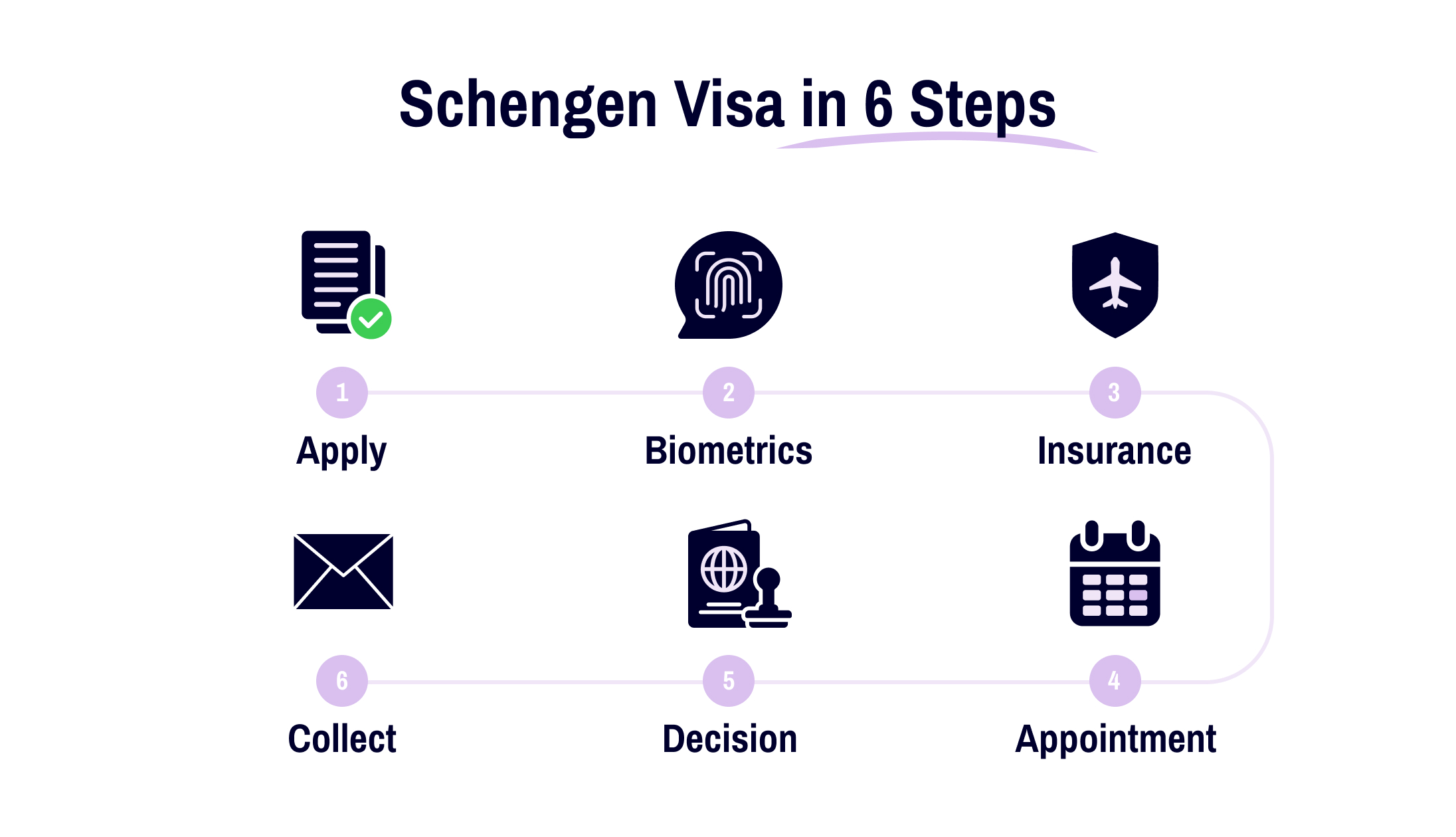
Denmark Schengen Visa Fees
The standard Schengen visa fees apply:
-
Adult (12 and over): €90
-
Child aged 6 to 11: €45
-
Child under 6: free
The €90 adult fee has been standard since 11 June 2024. The visa fee is non-refundable, even if your application is refused. Family members of EU, EEA or Swiss citizens exercising free-movement rights may be exempt.
Note: VFS Global charges a service fee, and applicants outside London pay a small courier charge, around €5, to move the file between centres. VFS displays the exact amounts in pounds; rely on the VFS page for the “payable today” total at your chosen centre.
Where to Apply
You complete and pay for your application online at ApplyVisa.um.dk, then submit in person at one of three VFS Global centres in the UK, such as London, Manchester or Edinburgh. VFS forwards your file to the Danish Embassy in London for a decision.
Processing time
Assume 15 calendar days as the baseline, but plan for longer in peak season, if your documents are incomplete, or if additional checks are needed.
-
European Commission: 15 days, extendable to 45 days
-
Danish Embassy practice: cases referred to the Danish Immigration Service can take up to 45 calendar days.
You can apply up to six months before you travel and no later than 15 working days before. Aim for four to six weeks ahead, or six to eight weeks in peak season.
One date to watch is when the Danish Embassy in London closes from 23rd December to 2nd January each year, and processing pauses during that window.
Travel Insurance for a Denmark Schengen Visa
Denmark’s checklist requires travel health insurance covering emergency medical care, hospitalisation and repatriation, with a minimum of €30,000 of cover. The European Commission confirms the same requirement for Schengen visa applications.
Your insurance is a legal entry condition. So, it is checked when you submit, and an application without a compliant cover is refused before it reaches a visa officer.
When you choose travel insurance for your application, you are looking for a policy that:
-
meets the €30,000 minimum across the whole Schengen Area
-
is valid for the full duration of your trip, including your return date
-
includes emergency repatriation, the part that most basic UK policies leave out
-
It is clearly documented, so it is easy for the visa officer to verify.
A Schengen-compliant policy like Gigasure’s Schengen Travel Insurance is built around these criteria and gives you written confirmation of cover, which makes the insurance part of your document file straightforward.
If you expect to make more than one trip to Europe this year, it is worth weighing single-trip cover against an annual multi-trip policy.
Upcoming Changes: EES and ETIAS
Two EU border changes are on the way for visa-exempt travellers, including British passport holders:
-
Entry/Exit System (EES): manual passport stamps are being replaced with biometric checks, fingerprints and a facial photo, at the Schengen border, rolling out during 2026.
-
ETIAS: from the last quarter of 2026, visa-exempt travellers will need an ETIAS authorisation before entering the Schengen Area. It is not a visa; it is a quick online approval, expected to cost around €20 and last three years, much like the US ESTA.
Timings have shifted before, so treat both as “coming soon” planning items rather than something to sort today.
The practical takeaway:
-
If you need a Schengen visa, your application follows the standard process above; ETIAS does not apply to you.
-
If you are visa-exempt, check official EU guidance closer to your travel date, as rollout details may change.
Common Reasons a Danish Schengen Visa Is Refused
Denmark applies the same Schengen refusal rules as every member state. If you are refused, you are told why and how to appeal. In practice, the most avoidable refusal triggers are the basics not lining up cleanly with your story and documents:
-
Missing or mismatched documents: the most common hold-up at submission.
-
Weak proof of funds: no payslips, no employer letter, or a balance that does not match your plans.
-
Insurance that falls short: below €30,000, not valid Schengen-wide, or expiring on your return date.
-
A UK residence document close to expiry: it should be valid for at least three months beyond your return.
-
Visa-shopping: applying through Denmark when another country is your real main destination, which Denmark warns can mean denied entry, a revoked visa or an entry ban.
-
An unclear itinerary: flight dates that do not line up with your accommodation for every night.
Essential Contacts for Your Denmark Visa Journey
-
ApplyVisa (applyvisa.um.dk): complete and pay for your application online.
-
VFS Global Denmark (UK): book your appointment and review the Denmark-specific document checklist.
-
Danish Ministry of Foreign Affairs (um.dk): official government guidance on visas to Denmark.
-
European Commission: applying for a Schengen visa.
Your Top Questions About Denmark
How long can I stay in Denmark with a Schengen visa?
A Schengen short-stay visa (Type C) allows up to 90 days in any 180 days across the whole Schengen Area, not Denmark alone. To avoid accidental overstays, especially if you are visiting several countries, use the official short-stay calculator.
Do I need a Schengen visa for Denmark if I live in the UK?
It depends on your nationality, not your UK residence. If your passport is from a visa-required country, you need a Schengen visa for Denmark, even with a BRP or settled status. British passport holders and other visa-exempt nationals can visit for up to 90 days in any 180-day period without a visa.
Does a Danish Schengen visa cover Greenland and the Faroe Islands?
No. Greenland and the Faroe Islands are part of the Kingdom of Denmark but sit outside the Schengen Area and the EU, so a standard Schengen visa does not cover them. You can include them in the same application, note it on the ApplyVisa form and tell VFS, using the relevant checklist.
How long does a Denmark Schengen visa take to process?
The standard Schengen processing time is 15 calendar days, extendable to 45 days if more detailed checks or documents are needed. Apply four to six weeks ahead, or six to eight weeks in peak season, and remember the Danish Embassy in London closes from 23rd December to 2nd January.
Do I really need travel insurance for a Denmark Schengen visa?
Yes. Denmark’s checklist requires travel health insurance covering emergency care, hospitalisation and repatriation, with a minimum of €30,000 of cover, valid across the whole Schengen Area for every day of your trip. A standard UK domestic policy will not qualify, and the cover is checked before your file reaches a visa officer.
Denmark Awaits! Start Your Scandinavian Adventure Today
You could be planning harbour-front dinners in Nyhavn, a cycle through Copenhagen’s neighbourhoods, a slower run up the coast to Kronborg Castle, or even adding on Greenland or the Faroe Islands. Denmark delivers a relaxed Scandinavian city break in a refreshingly manageable size.
Because Denmark is part of the Schengen Area, your planning follows the familiar short-stay rules, up to 90 days in any 180 days, so once your paperwork is in order, you can focus on the trip itself. If you are pairing Denmark with more of the region, our guides to the Sweden Schengen visa and Norway Schengen visa cover the same ground.
To keep the insurance part simple, you can arrange Schengen-compliant travel insurance with Gigasure in minutes, with the written confirmation of €30,000 medical cover that VFS needs to see, and move forward with your Denmark Schengen visa application with confidence.
Note: Information accurate as of June 2026. Always verify current visa requirements, document checklists and fees with the Danish Ministry of Foreign Affairs (um.dk), ApplyVisa and VFS Global before you apply.