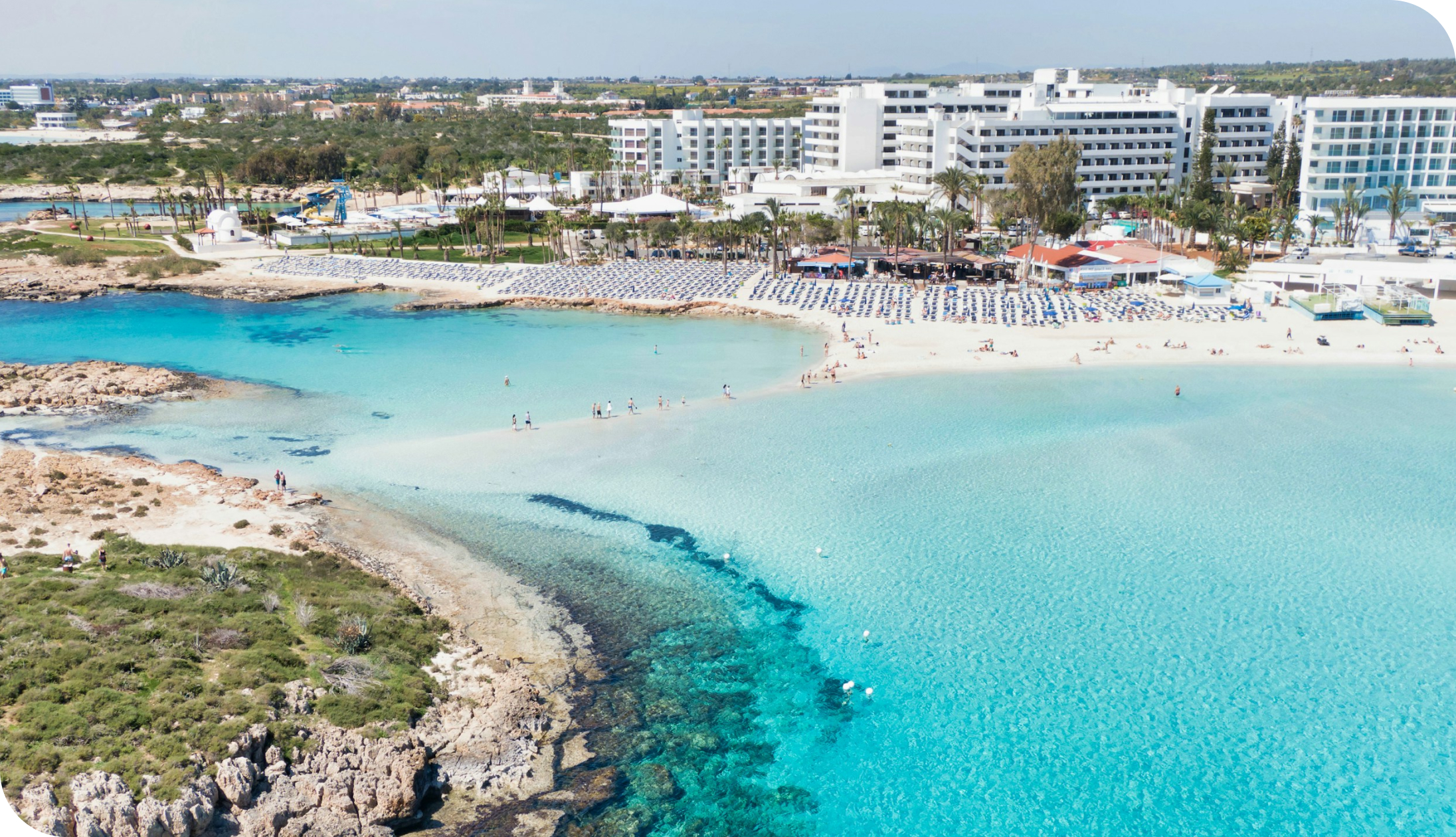


Exploring Cyprus by car is one of the easiest road-trip choices a UK driver can make. The island drives on the left, signage is bilingual, the main routes are well kept. You can cross from Limassol's seafront to the Troodos pine forests, Paphos's mosaics or Larnaca's salt lake in a couple of hours.
But before you collect the keys, it's worth knowing how driving in Cyprus differs from the UK in a handful of important ways. From speed limits and the strict drink-drive limit to the gaps left by your rental's standard insurance. This guide covers everything UK drivers need: licence rules, mandatory equipment, the truth about rental-desk Super Cover, the situation in
North Cyprus, and how Gigasure's Car Hire Excess Insurance closes the gaps your basic cover leaves wide open. Buckle up.
Cyprus Driving Laws & Regulations for UK Tourists
When driving in Cyprus, you'll find the rules of the road are closer to home than most European countries, but a few key points catch UK drivers out every year. Here's what you need to know before you set off:
Drive on the Left
Cyprus drives on the left-hand side of the road, the same as the UK. This is a legacy of British administration that ended in 1960, and it remains the single biggest reassurance for British drivers. Roundabouts, junctions and overtaking work exactly the way you're used to at home, and your rental car will be right-hand drive.
Minimum Driving Age
The legal minimum age to drive in Cyprus is 18 years old. However, rental companies set their own, stricter limits. Most won't hire anyone under 21, and some categories (SUVs, convertibles, luxury vehicles) are restricted to drivers 25 and over. Many firms also require you to have held your licence for at least one to three years.
Seat Belts & Child Restraints
Seat belts are compulsory for the driver and all passengers, front and rear. Children under five must travel in an approved child seat, and children aged five to nine need a booster seat. Children under 150cm tall should not travel in the front seat.
Drink Driving Limit
Cyprus enforces a strict blood alcohol limit of 0.05% (50mg per 100ml), lower than England's 0.08%. For newer drivers (licensed under three years) and professional drivers, the limit drops to 0.02%. Random breath-testing is common, particularly around tourist areas at night, and penalties include heavy fines, licence confiscation and potential vehicle impoundment. The safest approach is to avoid alcohol entirely if you plan to drive.
Speed Limits
Speed limits are posted in kilometres per hour (not mph) and are enforced by speed cameras on the main motorways. Standard limits are: 100 km/h on motorways (the A1, A5 and A6 routes connecting the main cities), with a minimum of 65 km/h; 80 km/h on rural roads; and 50 km/h in urban areas. Tolerance is roughly 20% on motorways and rural roads, but only 10% + 2 km/h in urban zones, so the margin for error in town is much smaller than UK drivers expect.
Mobile Phones & Headphones
Using a handheld mobile phone while driving is illegal and carries an on-the-spot fine of €85 plus one penalty point. Hands-free systems are permitted. Eating, drinking and holding any electronic device while driving are also restricted.
Headlights
Dipped headlights must be used in tunnels and in poor visibility (rain, fog), and from 30 minutes after sunset until 30 minutes before sunrise. Unlike France, daytime running lights are not legally required on most roads.
Penalty Points
Cyprus operates a penalty points system. Drivers who accumulate 12 points have their licence suspended by a court. Points expire after three years.
Documents UK Drivers Need for Car Rental in Cyprus
Getting the paperwork right before you collect your hire car saves time at the desk and protects you from disputes later. Here's what you should bring:
- Full UK Photocard Driving Licence: Your UK photocard licence is accepted across Cyprus for visits of up to six months, and no International Driving Permit (IDP) is required. If you still hold an older paper-only UK licence, or a licence from Jersey, Guernsey, Gibraltar or the Isle of Man, you may need an IDP. Check this with your rental company in advance. Drivers from outside the UK and EU are legally required to carry an IDP alongside their home licence.
- Passport: Your passport is your primary ID at the rental desk and during any police check. Make sure it's valid for at least three months beyond your return date.
- Credit Card in the Main Driver's Name: Almost all rental companies in Cyprus require a credit card to pre-authorise the excess deposit (typically €1,000 - €2,500 on a standard car, €3,000+ on SUVs and 4x4s). Debit cards are sometimes refused, confirm this in advance.
- Booking Confirmation: Print a copy or keep a clearly accessible digital version on your phone.
- Second ID for Additional Drivers: Every named driver must be present at pick-up with their own licence and passport. Unlisted drivers will void your insurance if they're behind the wheel during an incident.
Pro Tip: Keep digital copies of your licence, rental agreement and Gigasure policy in a folder on your phone. If you're asked for proof at a roadside check, you'll have everything in one place.
Mandatory In-Car Equipment in Cyprus
Cyprus requires every vehicle to carry the following safety equipment. Reputable rental companies will provide these at pick-up, but it's worth checking before you drive away. You're personally liable if any are missing during a roadside check:
Warning Triangle: Must be placed approximately 30 metres behind the vehicle in the event of a breakdown or accident.
Highly recommended additions:
- High-Visibility Reflective Jacket: Should be kept inside the cabin (not the boot) and worn before stepping onto the road after a breakdown.
- First Aid Kit: Compulsory in every hire car.
- Fire Extinguisher: Strongly recommended and supplied by most reputable rental firms.
- Spare Wheel and Jack: Standard issue in nearly all rental categories.
If anything is missing from your rental, ask the desk to add it before you sign the agreement. A missing triangle or hi-vis vest can lead to an on-the-spot fine.
Understanding Car Hire Excess in Cyprus
This is the section that catches most UK travellers out. The insurance bundled with your hire car looks comprehensive on paper, but it leaves several common types of damage uncovered, and the rental-desk upsell isn't always the best way to fix that.
What is CDW and What Does It Cover?
Collision Damage Waiver (CDW) is the basic insurance included with every car hire in Cyprus. It caps your liability for damage to the hire car at the excess amount stated in your rental agreement, usually €1,000 to €2,500 for standard cars, and €3,000 or more for SUVs, 4x4s and luxury categories. CDW is not full cover. If the car is damaged, you pay up to the excess before the waiver kicks in.
What CDW Typically Does NOT Cover
The small print matters here, because the headline "fully insured" claim hides a stack of exclusions. Standard CDW in Cyprus usually leaves you exposed to:
- Windscreen, glass and side-window damage
- Tyre punctures, sidewall splits and rim damage
- Undercarriage damage from speed bumps, kerbs or rough surfaces
- Roof damage from low branches, hailstones or car park barriers
- Interior damage, spilled drinks, burns and lost keys
- Damage incurred on unpaved or off-road tracks
- Damage incurred in North Cyprus (the area beyond the Green Line)
- Misfuelling and damage caused by misuse
Most claims UK travellers face fall into one of these categories, particularly glass and tyre damage from gravel-edged rural roads.
Rental Desk "Super Cover" Is It Worth Buying?
When you arrive at the desk, you'll be offered Super CDW (sometimes called Premium Cover or Full Protection). It reduces the excess to zero or near-zero and patches some of the exclusions above, but it typically costs €15 - €30 per day. On a one-week hire, that's €105 - €210 on top of your base rental. Convenient, but almost always the most expensive route to the protection you need.
A Better Option: Independent Car Hire Excess Insurance
Independent Car Hire Excess Insurance is a separate policy you buy from a UK insurer before you travel. It reimburses the excess your rental company charges if the car is damaged or stolen, and most policies also cover the items basic CDW excludes. Including glass, tyres, undercarriage, roof, misfuelling and lost keys.
Independent cover typically costs £3 - £8 per day for single-trip policies, with annual policies cheaper per day if you hire more than once a year. That's often two-thirds to three-quarters less than rental-desk Super Cover for equivalent or better protection.
The trade-off: you pay the rental company first if there's damage, then claim the money back from your independent insurer. The reimbursement process is straightforward, and Gigasure handles the claim easily through the app or website.
Planning a trip?
Arrange your Car Hire Excess Insurance for Europe before you fly. It's far cheaper than buying protection at the rental desk, often offers better coverage, and gives you the confidence to decline the counter upsell.
The North Cyprus Situation for Car Rental
Cyprus is divided by the UN-controlled Green Line. The Republic of Cyprus (south) is an EU member state; the self-declared Turkish Republic of Northern Cyprus (north) is recognised internationally only by Turkey, and the British government does not recognise it.
You can cross the Green Line as a tourist at several official checkpoints, Ledra Palace and Ledra Street in Nicosia, plus Agios Dometios and others, but your insurance probably won't come with you.
According to the UK Foreign, Commonwealth and Development Office, cars hired in the Republic of Cyprus often have no insurance cover in the north of the island. Most rental agreements issued in the south explicitly void your CDW, Super CDW and any excess cover the moment your car crosses into the north.
If you have an accident, breakdown or theft on the Turkish side without the right paperwork, you'll be personally liable for the full value of the car.
Common Driving Challenges in Cyprus
Even confident UK drivers find a handful of situations in Cyprus that need a bit of extra attention. Here's what to watch for:
The Akamas Peninsula and the Unpaved-Road Trap
The Akamas, in the north-west of the island, is one of Cyprus's most beautiful natural areas, and one of the easiest places to void your insurance. The famous Lara Beach turtle sanctuary, Avakas Gorge and the trails around the Baths of Aphrodite are accessed via unpaved tracks. The moment a standard hire car leaves tarmac, the CDW is technically void. If you're caught with off-road damage, the rental company will charge you in full.
Troodos Mountain Roads
The B9 and the network of roads through the Troodos massif are among the most scenic on the island, and the most demanding. Expect steep gradients, tight hairpins and occasional rockfall debris on the road surface. Drive slowly, use lower gears on descents to spare your brakes, and watch for goats and the occasional logging truck. Petrol stations in the mountains are sparse, and many close on Sundays.
Parking in Old Towns
Paphos, Larnaca and the old quarters of Nicosia and Limassol have narrow lanes that weren't designed for modern car widths. Wing-mirror and bumper damage from tight squeezes is common, and almost always charged against your excess. Use signposted municipal car parks rather than threading through old-town streets. Most cost €1 - €3 per hour, and parking is generally free in spots marked with single white lines.
Fuel Stops on Rural Routes
Many rural petrol stations close on Sundays and after 7pm on weekdays. Some are unmanned and require credit card payment at the pump. Fill up before you head into the mountains or onto the Akamas approach roads. Diesel and unleaded are both widely available; check which your rental needs before you fill, as misfuelling is almost never covered by basic CDW.
Cypriot Road Signs
Road signs in Cyprus use a mix of Greek and English. Distances and speed limits are in kilometres. Most warning signs follow the standard European format, so they'll be familiar to UK drivers. There are no toll roads anywhere in Cyprus, which removes one of the most common European driving complications.
What to Do If You Damage Your Hire Car in Cyprus
If something goes wrong, the order of events matters, particularly if you want a smooth claim later:
1. Report the damage to your rental company before you return the car.
Most rental agreements require notification within 24 hours.
2. Call the police if another vehicle is involved.
A police report is required for theft claims and most multi-vehicle accident claims. Dial 112 for emergencies.
3. Photograph everything
The damage to the car, the surrounding area, any other vehicles, and the rental agreement.
4. Get a copy of the rental company's damage report.
This is what your independent insurer will need to process your claim.
5. Submit your claim to Gigasure
Through the Gigasure app or website, with the damage report, receipt showing the excess charge, rental agreement and your photographs.
Why Choose Gigasure for Cyprus Car Hire Excess Insurance?
Gigasure's Car Hire Excess Insurance reimburses the excess your rental company charges if your hire car is damaged or stolen, up to the limit stated in your policy.
Cover includes the items most likely to catch out Cyprus travellers, damage to windows, tyres, roof and undercarriage, plus lost keys and misfuelling cover. Both theft and collision damage are included.
For trips that cross into North Cyprus or include off-road sections of the Akamas, read the policy wording in full before you buy. No insurance covers everything, and knowing the limits upfront saves arguments later.
Enjoy the Journey to Cyprus
Driving a rental in Cyprus is one of the most relaxing road-trip choices a UK traveller can make. Familiar driving side, well-maintained main roads, bilingual signage and a manageable size mean you can comfortably cover the whole island in a week.
The only real catch is the same one that crops up everywhere in Europe: standard CDW leaves enough gaps to make a single damage claim painful, and the rental-desk upsell is rarely the best-value way to plug them.
Before you fly, do a final check that you have your full UK photocard licence, passport, rental confirmation, credit card in the main driver's name, and proof of independent excess cover.
Then it's just a question of how you want to spend the week: Limassol seafront, Troodos pine forests, Paphos mosaics, Akamas trails on foot, or the Larnaca salt lake at sunset.
Compare single-trip and annual policies with Gigasure's Car Hire Excess Insurance and get organised before you fly.
Safe travels, and enjoy every mile.