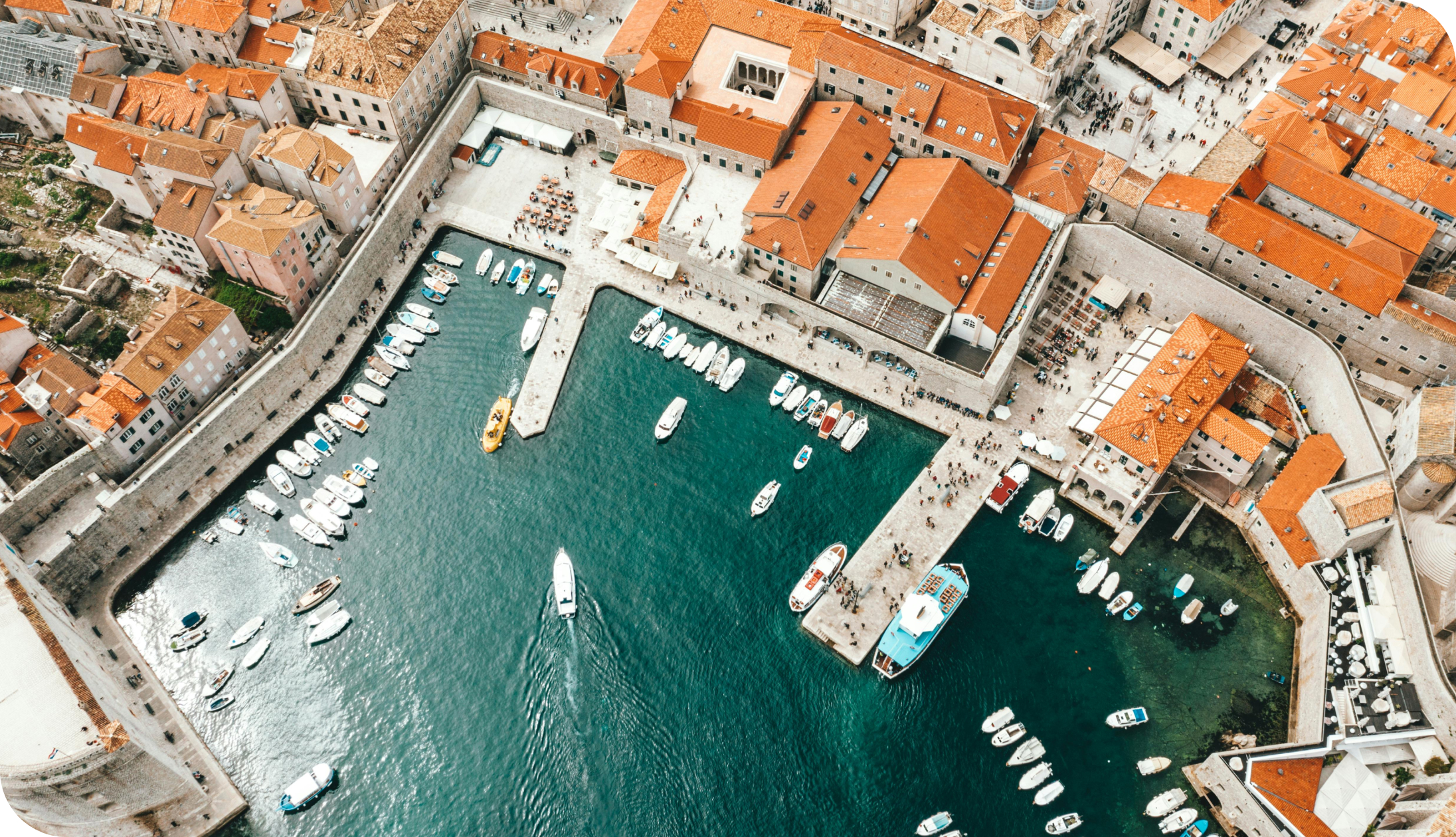


If your Croatia plans include island-hopping in Hvar, wandering Dubrovnik’s old town, or a quick weekend in Split, the big question is simple: do you need a Schengen visa?
Croatia has been a full Schengen member since 1 January 2023, which means most short trips now follow standard Schengen short‑stay (Type C) rules (up to 90 days in any 180 days) and the same “main destination” application logic used across the Schengen area.
Do you need a Schengen visa for Croatia?
You generally need a Schengen short-stay visa (Type C) if you are a non‑EU national who is not visa-exempt for Schengen travel. A Type C visa lets you stay in the Schengen area for up to 90 days in any 180-day period.
Croatia’s official guidance confirms that if you hold certain valid Schengen documents, you may not need a separate Croatian visa for stays in Croatia up to 90 days in any 180-day period. This includes, for example:
- a uniform visa (C) for two or multiple entries valid for all Schengen states, and
- a residence permit issued by a Schengen Member State.
Note: Eligibility depends on the exact Schengen document type and whether it still has valid entries/validity at the time you enter Croatia.
What type of visa do you apply for?
Croatia’s Ministry of Foreign and European Affairs describes two Schengen visa types relevant here:
- Type A: airport transit
- Type C: short stay (tourism, business, private visit, transit, etc.) for up to 90 days in any 180 days, issued for one, two, or multiple entries.
Croatia Schengen visa requirements
Croatia’s official checklist logic (via Croatia’s MFA guidance and the VFS Croatia UK “Documents Required” section) is consistent with the Schengen Visa Code basics: passport, form, photo, medical insurance, and evidence of your trip purpose + finances + intent to leave.
1) Passport requirements
Your passport must be:
- issued within the last 10 years
- valid for at least 3 months beyond the visa expiry / planned departure
- have at least two blank pages
2) Visa application form
- Complete the form online: Croatia’s Ministry of Foreign and European Affairs provides an online visa application form at crovisa.mvep.hr.
- Print it for submission: After completing the online form, you print the application and submit it together with your supporting documents at the competent Croatian Embassy/Consulate or via a VFS visa centre.
3) Photo
Croatia’s VFS guidance asks for one colour photograph that is:
- Recent: taken within the last 6 months
- Clear and compliant: good quality, face in focus, light background, full face visible.
4) Travel medical insurance
You must have travel health insurance covering:
- repatriation, urgent medical assistance and/or urgent hospitalisation
- with a minimum coverage of EUR 30,000
- valid for Croatia for the full stay (and for multiple-entry visas, at least covering the first trip
5) Proof of purpose
VFS Croatia lists acceptable “purpose of stay” evidence, such as:
- hotel/other accommodation booking
- day-to-day itinerary with accommodation for the entire stay
- paid tourist package (where relevant)
6) Proof of sufficient funds
Croatia VFS guidance states the financial requirement as:
- €70 per day of the estimated stay in Croatia
- €30 per day if you have proof of a paid tourist package (or similar)
Supporting documents can include payslips and/or bank statements showing balance and transactions for the last three months (and other income evidence).
7) UK-resident applicants
If you’re applying from the UK but you’re not a UK citizen, VFS Croatia UK notes you may need UK immigration status evidence (e.g., BRP/digital status) with validity requirements beyond your return date.
How to apply for a Schengen visa for Croatia
Croatia’s MFA confirms the core process: complete the online form, print it, then submit in person at the competent Croatian embassy/consulate or at a VFS Global Visa Application Centre.
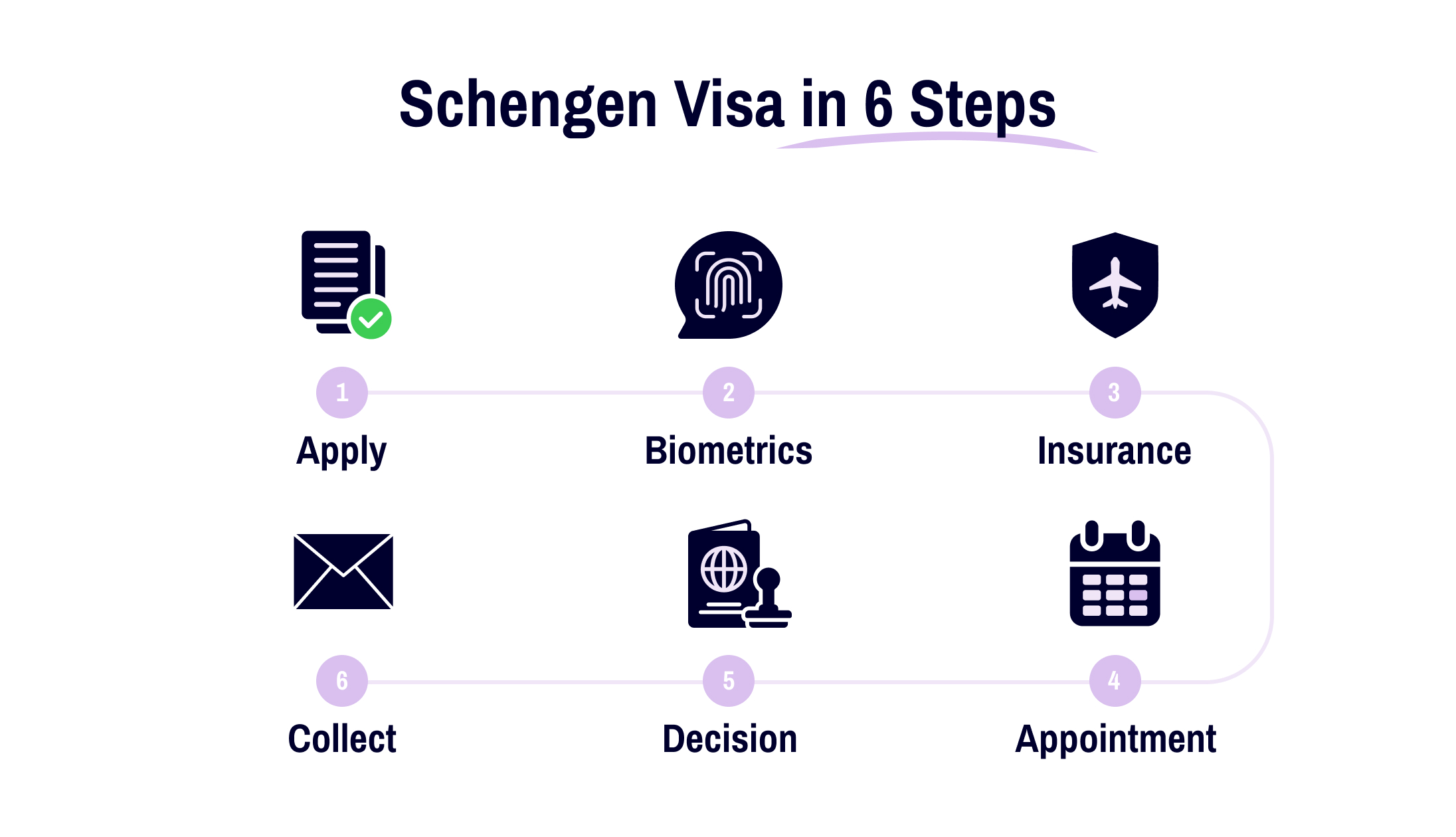
Step 1: Check you’re applying to the right country
You apply to the Schengen state that is your main destination (or first entry if time spent is equal across countries). Croatia repeats this in its official Schengen guidance.
Step 2: Complete the online form
Start your Croatia visa application by filling in the online form.
Step 3: Print, sign, and prepare your full document pack
Your printed application form plus your supporting documents (passport, photo, insurance, itinerary, accommodation, funds, etc.) are submitted to the relevant embassy/consulate or VFS centre.
Step 4: Book your appointment and submit in person
Schengen rules require fingerprints to be collected at submission (some exemptions exist), and Croatia confirms the requirement to provide fingerprints for VIS.
Step 5: Wait for a decision
The European Commission notes typical processing is 15 days, extendable up to 45 days if further checks or documents are needed.
Note that processing can extend to 30 or 60 days in certain cases (e.g., missing documents or justified reasons).
Croatia Schengen visa fees
The European Commission lists standard Schengen fees as:
- €90 for adults
- €45 for children aged 6 - 12
If you apply through a visa service centre (like VFS), an additional service fee may apply.
Note: VFS Croatia for the UK displays visa fees in local currency and lists service fees by centre; always rely on the VFS page for the “payable today” amount at your chosen location.
Where to apply
Croatia’s MFA states: if the main destination is Croatia, you submit the application at the competent Croatian embassy/consulate or at a VFS Global Visa Application Centre.
For UK applicants, Croatia’s official guidance includes the UK VFS route.
Processing time
Assume 15 days as the baseline, but plan for longer if you’re travelling in peak season, your documents are incomplete, or additional checks are needed. This matches:
- European Commission: 15 days, extendable to 45 days
- VFS Croatia: may extend to 30 or 60 days in some cases
Travel insurance for a Croatia Schengen visa
Croatia’s VFS requirements clearly state you must have travel health insurance covering urgent medical care and repatriation with minimum €30,000 coverage. The European Commission also confirms that medical insurance (emergency care, hospitalisation, and repatriation) is required for Schengen visa applications.
When you choose travel insurance for your application, you’re looking for a policy that
(1) Meets the €30,000 requirement
(2) Is valid for the full duration of your trip
(3) Is clearly documented, so it’s easy for the visa officer to verify.
A Schengen-compliant policy like Gigasure’s Schengen travel insurance is designed specifically around these criteria, which makes the “insurance” part of your document file straightforward.
Upcoming changes: ETIAS
If you’re travelling to Croatia visa-free (rather than applying for a Schengen visa), it’s worth keeping an eye on ETIAS as a planned future requirement. ETIAS is expected to be introduced for visa‑exempt travellers in the future, often discussed around 2026, but timings can shift, so treat it as a “coming soon” travel-planning item rather than something you need to do today.
For now, the practical takeaway is simple:
- If you need a Schengen visa, your application follows the standard Schengen process and Croatia’s official Croatia/VFS guidance.
- If you are visa-exempt, check official EU guidance closer to your travel date, as ETIAS rollout details may be updated before you go.
Common reasons Croatia visa applications get refused
The European Commission notes that if your visa is refused, you’ll be told why and how to appeal.
In practice, the most avoidable refusal triggers tend to be the “basics” not lining up cleanly with your story and documents:
- Missing required documents (or documents that don’t match what the checklist expects)
- Weak proof of funds vs. Croatia’s stated daily requirement (€70/day, or €30/day with a paid tourist package)
- Insurance that doesn’t clearly show the required minimum coverage and scope.
- Unclear itinerary/accommodation coverage for every night of the trip
Essential Contacts for Your Croatia Visa Journey
- VFS Global Croatia (UK): Book your appointment, review the Croatia-specific checklist requirements.
- Croatia - Ministry of Foreign and European Affairs (MVEP): Official government guidance on Schengen visas for Croatia
- Find your nearest Croatian Embassy/Consulate: Croatia’s official embassies and consulates directory to identify the competent mission for your country of residence.
- European Commission: Applying for a Schengen visa
Your Top Questions About Croatia
How long can I stay in Croatia with a Schengen visa?
A Schengen short-stay visa (Type C) allows stays of up to 90 days in any 180 days across the Schengen area. Croatia confirms that Type C covers stays not exceeding 90/180. To avoid accidental overstays (especially if you’re visiting multiple countries), use the official short-stay calculator.
If I’m visiting Croatia and other Schengen countries, where do I apply?
You apply at the consulate of your main destination (the country where you’ll spend the longest time). If time is equal, apply to the country of first entry. Croatia’s official Schengen guidance repeats this rule.
Do I have to apply online for Croatia first?
Croatia provides an online visa application form at crovisa.mvep.hr, and states that the printed form must then be submitted to the competent embassy/consulate or visa centre. The crovisa portal itself describes the online form as the “first step” and reminds applicants to save their serial number and PIN.
Can I apply through VFS Global in the UK?
Yes, Croatia confirms that if Croatia is your main destination, you can submit at the competent Croatian embassy/consulate or at a VFS Global Visa Application Centre.
What’s the minimum bank balance or daily spending money I need to show for Croatia?
Croatia’s VFS guidance states €70 per day of the estimated stay, or €30 per day if you have proof of a paid tourist package (or similar). Your evidence can be bank statements (showing balance and transactions) and/or payslips and other income proof.
Do I really need travel insurance for a Croatia Schengen visa?
Yes. Croatia’s VFS requirements specify travel health insurance covering urgent medical assistance/hospitalisation and repatriation with a minimum coverage of €30,000. The European Commission likewise lists medical insurance (emergency care, hospitalisation, and repatriation) as a required part of a Schengen visa application.
How early should I apply?
Schengen guidance says apply no earlier than 6 months before travel and at least 15 days before your intended journey. Croatia repeats the same timing rule in its official visa guidance.
How long does it take to process a Croatia Schengen visa?
The standard Schengen processing time is 15 days, and can be extended up to 45 days if more detailed examination/additional documents are needed. VFS Croatia UK additionally notes that processing can be extended to 30 or 60 days in certain situations.
Croatia Awaits! Start Your Adriatic Adventure Today
You could be planning to wander Dubrovnik’s storybook Old Town, island-hop around Hvar and Brač, chase waterfalls in Plitvice Lakes National Park, or soak up Split’s café culture along the Riva. Croatia delivers a “big trip” feel in a refreshingly manageable size.
And since Croatia is part of the Schengen Area, your trip planning follows the familiar short‑stay rules, up to 90 days in any 180-day period, so once your paperwork is in order, you can focus on the fun part: choosing beaches, ferries, and where the best sunset is tonight.
If you’re looking to keep this part simple, you can arrange Schengen-compliant travel insurance with Gigasure in minutes and move forward with your Croatia Schengen visa application with confidence, without getting stuck deciphering policy wording at the last minute.
Note: Information accurate as of February 2026. Always verify current visa requirements, document checklists, and fees with official Croatian sources and the relevant application channel before you apply.