

Greece is one of Europe’s most rewarding destinations for a self-drive adventure. From the ancient ruins of the Peloponnese and the clifftop monasteries of Meteora to the turquoise bays of Crete and the volcanic caldera of Santorini, a Greece road trip lets you connect an extraordinary range of history, landscapes, and island experiences under your own steam.
This comprehensive guide covers everything you need to plan a memorable self-drive holiday: the best time to travel, how to hire a car in Greece, key road rules, detailed itineraries for the mainland and islands, a realistic cost breakdown, and answers to the most frequently asked questions.
Quick Glance at Greece Road Trip
|
Topic |
Quick answer |
|
Best time to go |
- April - May and October (shoulder seasons) for mild weather and lighter traffic - June - September for guaranteed beach weather; winter for solitude (some mountain passes may close) |
|
Minimum trip length |
5 days for an Athens - Peloponnese highlights loop |
|
Recommended duration |
7 - 10 days for Classical Greece (Athens, Delphi, Meteora, Peloponnese) |
|
Extended trip |
14 days for the mainland plus a full island road trip on Crete or Zakynthos |
|
Best mainland starting point |
Athens (largest rental fleets, direct motorway access to all regions) |
|
Best island starting points |
Chania or Heraklion (Crete), Zakynthos Town (Zakynthos) |
|
Vehicle recommendation |
Compact manual car with sufficient hill power; book automatics early as they sell out quickly |
|
Driving side |
Right-hand side; overtake on the left |
|
Speed limits |
- 50 km/h in towns - 90 - 110 km/h on open roads - 130 km/h on motorways |
Why Greece Is Perfect for a Road Trip
Few European countries suit self-drive travel as naturally as Greece. Its major archaeological sites, mountain regions, and stunning coastlines sit in geographically compact clusters, easy to connect by car, yet far enough apart to make the journey itself feel like an adventure.
Ancient history
Greece’s most important ancient sites, such as Mycenae, Epidaurus, Olympia, Delphi, and Meteora, are linked naturally by road. Driving lets you arrive early, park close to viewpoints, and combine ruins with villages and wineries in a single flowing day.
Extraordinary landscape diversity
In a single driving itinerary, you can go from olive-grove plains and vineyard valleys to mountain passes, then down to turquoise bays and volcanic cliffs, often within a day’s drive.
Hidden gems no tour bus reaches
With your own car, you can reach small cliff-edge monasteries, mountain villages with no bus service, and deserted coves with unmarked parking, then reroute on a whim when the light or weather changes.
Planning Your Greece Road Trip
Best time to Visit:
- Spring (April - May): Comfortable temperatures (18 - 25°C), lush countryside, quieter sites; note Greek Orthodox Easter can spike domestic travel.
- Summer (June - September): Full ferry/rental capacity, beach weather, but heat (often 35°C+) and congestion, plan drives early/late and keep water topped up.
- Autumn (October): Warm seas, fewer crowds, spectacular light; watch for brief downpours that can affect island roads.
- Winter (November - March): Some northern/high Peloponnese passes can close with snow; ferry schedules are reduced, but lower Peloponnese and Crete can be quiet and pleasant.
Hiring a car in Greece: Everything You Need to Know
Most visitors pick up at Athens International Airport or Thessaloniki Airport. On islands, Chania Airport / Heraklion Airport serve Crete, and Zakynthos Airport serves Zakynthos. Book early for summer, as automatics and larger vehicles sell out quickly on the islands.
Documentation requirements
- EU/EEA licence holders: Home licence accepted (no IDP).
- Non‑EU visitors (UK, US, Canada, Australia): Legally recognised for short stays, but many rental companies still request an IDP, safest to carry both.
- Age requirements: Commonly 21+ with 1 - 2 years’ experience; under‑25 surcharges can apply.
- Payment: Credit card in the main driver’s name is usually required; extra drivers bring their own licence and may incur a daily fee.
Choosing the right vehicle
- Compact manual: Best all-rounder for narrow roads/parking and fuel efficiency.
- Automatic: Convenient but more expensive and often limited, book well in advance.
- SUV/4x4: Only useful for rough access tracks; unnecessary for standard itineraries.
Greece Road Rules & Driving Tips
- Drive on the right; overtake on the left.
- Headlights on at all times, even in daylight.
- Speed limits: 50 km/h urban | 90 - 110 km/h open roads | 130 km/h motorways.
- Seatbelts compulsory; handheld phone use banned (hands‑free required).
- Toll roads are common on key corridors; keep cash or a card handy (often €1.50 - €3.50 per plaza).
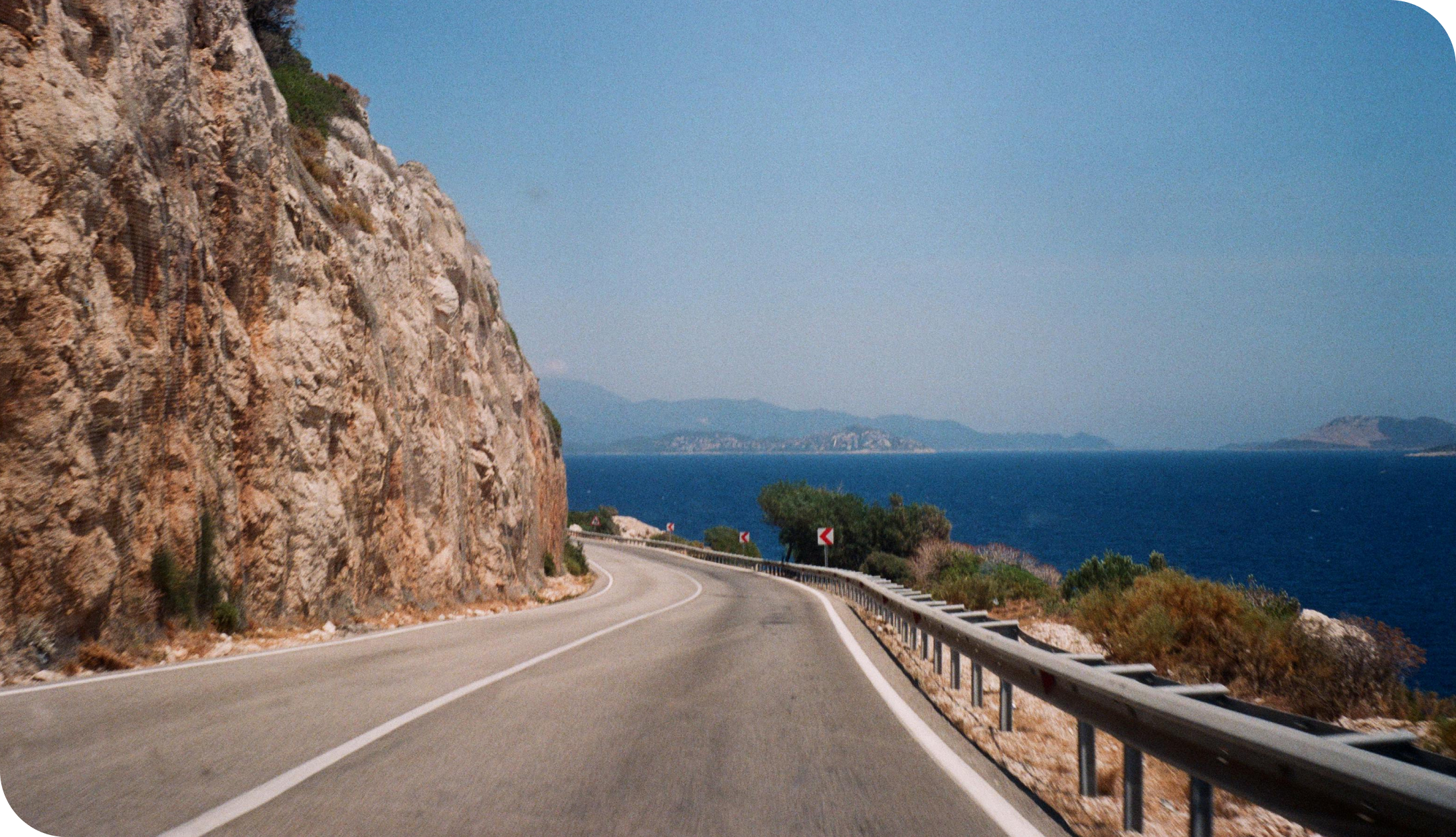
- Mountain/island roads can be narrow with blind bends, hence drive defensively and avoid rural night driving.
- The European emergency number is 112. Note your rental company's own breakdown number separately.
Navigation tips
Download offline Google Maps regions, as coverage can be patchy in mountain areas. Maps.me is a lightweight offline alternative. If your route involves ferries, book car spaces directly with ferry operators in summer.
Greece Road Trip Cost Breakdown for 7 Days
|
Cost item |
Typical range |
|
Car hire (7 days) |
£200 - £450 / €230 - €520 |
|
Fuel |
£80 - £150 / €90 - €175 (often higher on islands) |
|
Motorway tolls |
£15 - £40 / €18 - €46 |
|
Car Hire Excess Insurance |
£30 - £60 / €35 - €70 (7 days, independent insurer) |
|
Accommodation (per night) |
£50 - £150 / €60 - €175 (higher in Santorini) |
|
Food & dining |
£25 - £60 / €30 - €70 per day |
|
Archaeological entries |
£10 - £20 / €12 - €24 per major site |
|
Island ferry with a car |
£40 - £90 / €46 - €104 each way |
Best Greece Road Trip Routes for The Mainland
1. Athens to Peloponnese Road Trip
Ideal duration: 5–7 days | Best season: Spring and autumn
The Peloponnese road trip is the definitive Greece road trip itinerary and the natural starting point for first-time visitors. Athens sits at the northeastern corner of the Peloponnese peninsula, connected via the Corinth isthmus, just over an hour’s drive (approx. 85 km / 53 miles).
Highlights:
- Corinth Canal: Your perfect “break the drive early” stop. Park above the canal for dramatic views, and give it 30 minutes before pushing south.
- Mycenae: The Bronze Age citadel of Agamemnon, arrive early to beat the heat and coach crowds; allow 2 - 3 hours for the Lion Gate, graves and Treasury of Atreus.
- Nafplio: Greece’s first modern capital and an ideal overnight base. Park once, explore on foot (old town lanes, Bourtzi fortress, Palamidi’s 999 steps).
- Epidaurus: A high-impact, low-time stop, the theatre’s acoustics are the headline; allow 1.5 - 2 hours and pair it with Mycenae or Nafplio.
- Olympia: Birthplace of the Olympic Games. Treat it as a proper half-day for the site and museum. rather than a quick tick-box.
- Mani Peninsula: Add it for fewer crowds and more “road-trip story” energy, tower-house villages, gorges, and dramatic southern scenery (great overnights: Stoupa/Kardamyli).
Where to Eat:
- Corinth region: Look for Corinthian raisins (“black gold”), olive oil, and fresh fish/seafood, plus traditional pasta and fruit preserves if you stop for lunch.
- Peloponnese classics (region-wide): Order gourounopoula (roast pork), pasto/synglino (cured/smoked pork), and celebratory sweets like diples when you see them.
- Nafplio: Lean into fresh seafood and classic taverna dining; Nafplio’s restaurant scene is especially strong for grilled fish/octopus and shareable plates.
2. Oracle & Monasteries Road Trip: Athens to Delphi & Meteora
Distance
- Athens to Delphi 178 km / 111 miles
- Delphi to Meteora 215 km / 134 miles
Driving Time
- 2.5 hrs (Athens to Delphi)
- 2.5 hrs (Delphi to Meteora)
*best enjoyed over 4 - 6 days
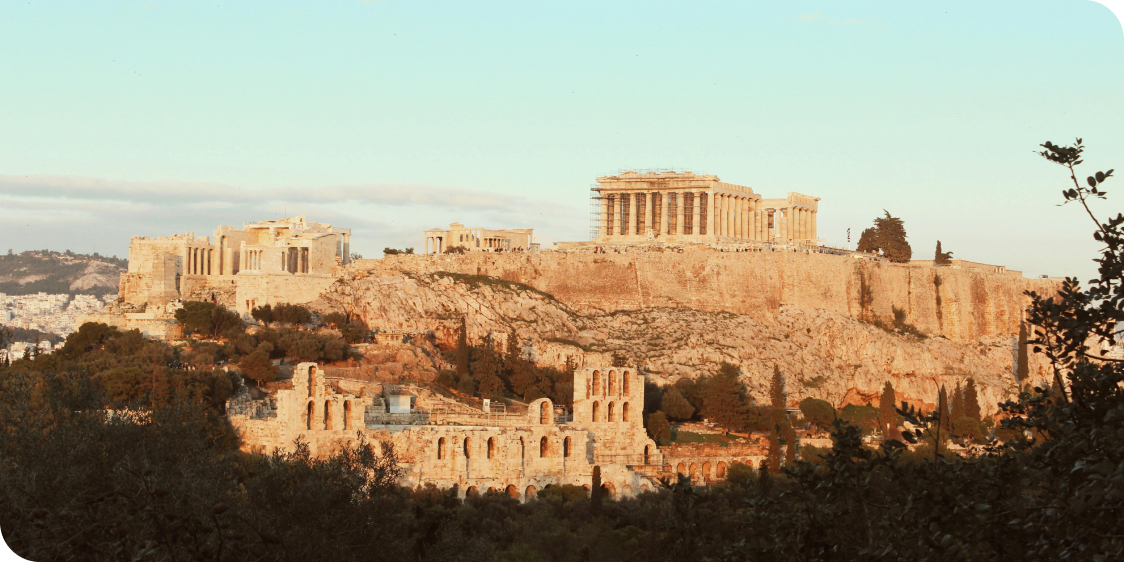
This inland route links two of Greece’s most atmospheric destinations: Delphi’s cliffside sanctuary and Meteora’s monasteries perched on sandstone pillars. It works as a standalone road trip or as a powerful add-on to the Peloponnese loop.
Highlights:
- Delphi: Give it at least a half-day, and consider staying overnight so you can return early the next morning when the light is soft and the crowds are thinner.
- Arachova: A short, worthwhile detour would be a mountain village stop that’s perfect for lunch, coffee, or an overnight base in cooler seasons.
- Kalambaka / Meteora: Arrive for sunset viewpoints if you can, then start early the next day; the ring road and side lanes make monastery-hopping genuinely car-friendly.
Where to Eat:
- Formaela: Arachova’s famous local cheese (PDO), typically served grilled or fried, order it as your “you’re definitely in the right place” dish.
- Kontosouvli: A deeply satisfying post-monastery meal: large chunks of marinated pork, skewered and slow-roasted, then shaved and served as it cooks.

3. Northern Scenic Drives
Northern Greece Explorer: Thessaloniki, Mount Olympus & Halkidiki
Distance: Multi-stop region (varies by peninsula and detours)
Driving Time: Best enjoyed over 7 - 10 days
Northern Greece is often underratedm but it delivers some of the country’s most dramatic driving, from Olympus foothills to pine-backed Aegean beaches, anchored by Thessaloniki’s energy and food culture.
Highlights:
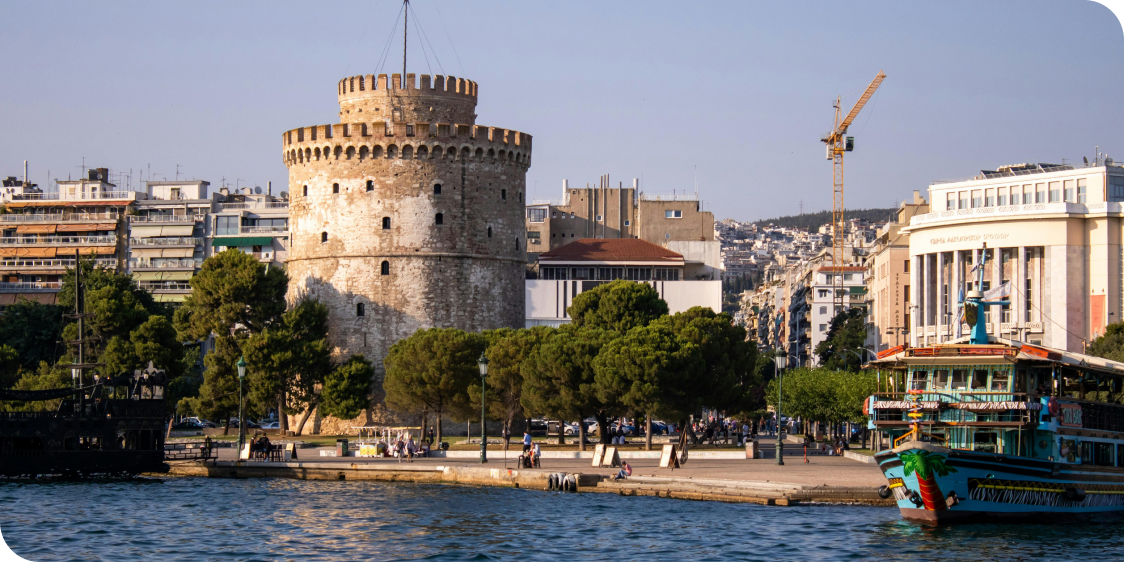
- Thessaloniki: Explore the waterfront, White Tower, and Byzantine heritage on foot first, then collect your hire car when you’re ready to head out.
- Mount Olympus National Park: A perfect drive + short hike stop, even if you’re not attempting the summit, great scenery and road-trip pacing.
- Vergina: A deliberate half-day museum stop, one of Greece’s most breathtaking archaeological experiences.
- Halkidiki peninsulas: Drive coastal and inland roads across Kassandra and Sithonia for coves, viewpoints, and long lunches; Athos is boat-only access.
Where to Eat:
- Bougatsa: Iconic northern pastry served sweet or savoury, a classic breakfast or snack.
- Trigona panoramatos: Syrup-dipped, custard-filled phyllo cones, the kind of dessert you plan a detour around.
- Halkidiki fish-taverna staples: Make seafood the headline, especially grilled octopus, calamari, and classic Greek meze plates by the water.
Best Greece Road Trip Routes for The Islands
1. Crete’s West & Beyond: Chania to Rethymno
Distance: Route network (varies by beach and gorge detours)
Driving Time: Best enjoyed over 5 - 7 days in western Crete
Crete is the most rewarding Greek island for driving: big enough for real variety, with coastal runs, mountain villages, and iconic beaches that genuinely feel better with a car
Highlights:
- Chania Old Town: Park outside the tight lanes, explore on foot, then start your driving days from day two.
- Lake Kournas: An easy scenic stop that’s perfect for a slow lakeside lunch.
- Rethymno: A half-day harbour-and-fortress stop that often becomes a full day once you start wandering.
- Preveli Beach: Big drama with palm gorge and lagoon, but the access road is narrow/steep, built in time.
- Elafonissi: The approach drive is part of the reward; arrive early in summer for parking.
- Samaria Gorge / Omalos plateau: A full-day hike if you do it, but even the drive into the high country delivers a completely different Crete.
Where to Eat:
- Dakos: A signature Cretan dish built around barley rusk, tomatoes, cheese, and oregano.

2. Santorini’s Caldera Loop: Fira to Oia
Distance: Compact island loop (varies by detours)
Driving Time: Best enjoyed over 2 - 4 days
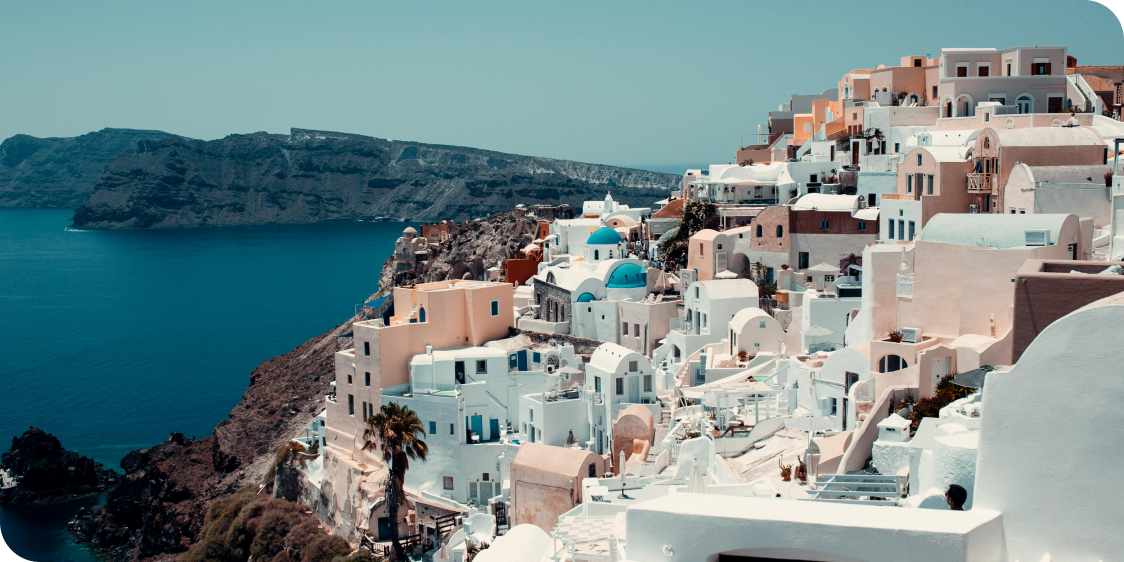
Santorini is small, but it rewards a hire car for one big reason: control. You can time viewpoints, beat congestion, and connect caldera villages with beaches and wineries without relying on taxis or crowded buses.
Highlights:
- Fira: A practical base with access to both caldera-side and interior roads, park on the outskirts rather than fighting cliff-edge spaces.
- Oia: Driving makes it easy; timing makes it enjoyable. Arrive early afternoon (or earlier) in summer to avoid parking stress.
- Imerovigli: Quieter panoramas with fewer crowds, perfect when you want caldera drama without the Oia crush.
- Akrotiri and Red Beach: A strong half-day pairing: archaeology first, then a coastal payoff.
Where to Eat:
- Tomatokeftedes: Santorini’s famous tomato fritters, a signature local meze.
3. Zakynthos Shipwreck Circuit: Zakynthos Town to Navagio viewpoint to Blue Caves to mountain villages
Distance: Circular island route (varies by detours)
Driving Time: Best enjoyed over 3 - 5 days
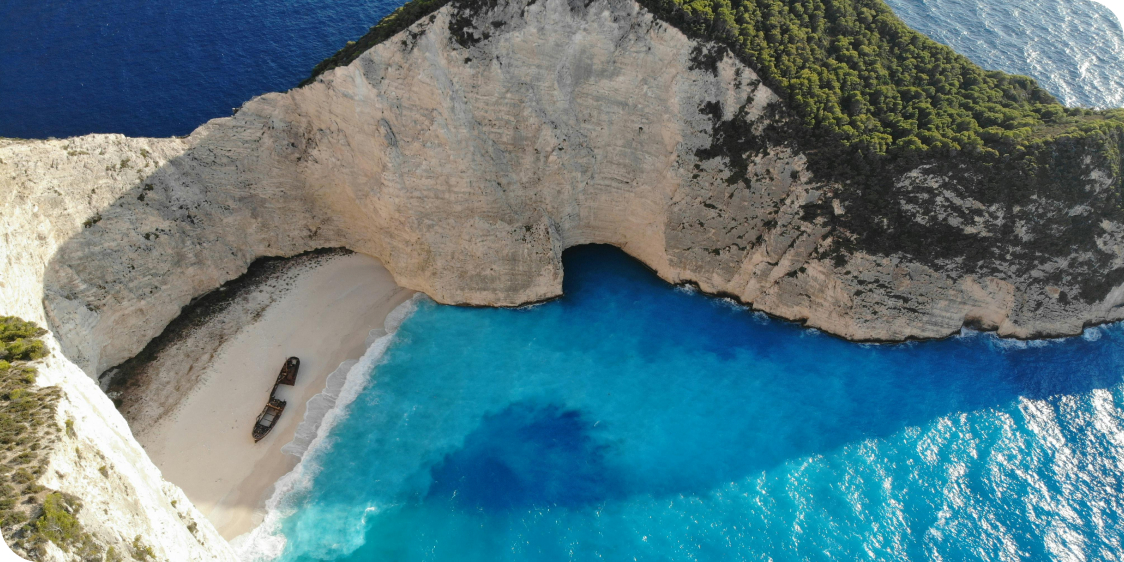
Zakynthos is ideal for a tight, high-reward island drive: clifftop viewpoints, sea caves, and village detours that are dramatically easier (and more flexible) with your own wheels.
Highlights:
- Zakynthos Town: Use it as your logistics hub, start the north loop early the next morning to beat crowds.
- Navagio (Shipwreck) viewpoint: Do this first for the cleanest experience; multiple pull-offs give you different angles without the “queue energy” if you’re early.
- Blue Caves (Skinari Cape): Boat trip for reflected blue light, then back to cliff viewpoints above.
- Volimes + mountain villages: Slow-lunch detours, local products, and winding interior roads that feel properly “road-trip.”
- Laganas Bay + Gerakas Beach: Protected turtle nesting area in season, follow restrictions and signage.
Where to Eat:
- Mantolato: Local nougat made with egg whites, almonds, and lots of honey, ideal road snack material.
Practical tips for driving in Greece
Parking
Athens and peak Santorini (Fira/Oia) can be genuinely difficult at midday in high season. Use peripheral car parks, metro/tram in Athens, and arrive early for popular island beaches (around 09:00 in summer).
Fuel planning
Stations are plentiful on main routes but scarcer in mountain areas and on smaller islands. Keep the tank above half when going rural. Expect higher petrol prices on the islands.
Mountain road safety
Expect hairpins, narrow lanes, and drops. Drive slowly, use the horn on blind bends (common local practice), pull over safely to let faster traffic pass, and avoid mountain drives after dark, especially in the rain.
Packing essentials
Bring offline maps/backup navigation, a portable charger, reusable water bottles, sun protection, layers for mountain sites, euro coins/card for tolls, and your rental company’s emergency number saved.
The Importance of Car Hire Excess Insurance in Greece
Standard car hire typically includes third-party liability, but it usually comes with a substantial excess, where you could be liable for €500 to €3,000 or more, even for minor damage. Independent car hire excess cover can protect you from these charges at a fraction of rental-desk pricing.
What does Gigasure Car Hire Excess Insurance cover?
With Gigasure, your Car Hire Excess Insurance policy typically includes:
- Excess protection up to £10,000 (bodywork, tyres, roof, windscreen, undercarriage; plus fire/vandalism/theft).
- Misfuelling covers up to £2,000.
- Rental car key protection included.
- Covers up to 9 named drivers.
- Annual multi-trip policies can cover up to 65 days of continuous cover per rental agreement.
Why Travel Insurance is Also Essential for a Greece Road Trip
Car Hire Excess Insurance covers your vehicle-related costs, but it does not protect you against everything that can go wrong on a Greek road trip.
Travel Insurance covers the gaps: unexpected medical treatment (a twisted ankle on a Meteora path or heat exhaustion on a Santorini hillside), trip cancellation if unforeseen circumstances prevent travel, lost or stolen belongings, and flight delays with Gigasure's GigaShield feature activating cover for delays of 3 hours or more.
With Gigasure, you can arrange both Car Hire Excess Insurance and Travel Insurance in a single place, managing both policies through the Gigasure app for complete peace of mind throughout your Greece road trip. Travel smart. Stay protected.
Time to plan your Greece road trip
A Greece road trip is one of the most rewarding ways to experience the country: ancient ruins, dramatic inland monasteries, and crystalline island beaches, at your own pace, on your own schedule. The key is smart planning: choose the right season, book early, build in extra time for mountain/island roads, and protect your trip with the right insurance so surprises stay manageable. Have a good journey.