

Hiring a car in Greece gives you the freedom to chase coastal views, winding roads, and hidden mountain villages on your own schedule. But before you set off, it’s vital to understand Greek driving laws and gather the proper paperwork. This friendly-expert guide will walk you through everything UK travellers need, with reassuring tips on licences, insurance, road rules, and local quirks, so you can hit the road with confidence. We’ll cover legal requirements (permits, insurance, and documents), essential driving regulations, local etiquette, and insider advice. By the end, you’ll be ready for the Greek roads, and we’ll show how Gigasure’s Car Hire Excess Insurance for Greece can give you extra peace of mind on your journey.
Being prepared with the right documents and knowledge means you can relax and enjoy the ride through Greece’s stunning landscapes. Let’s dive in!
Licence Requirements for Driving in Greece (ID, Permits & Age)
- Valid Driving Licence: To legally drive in Greece, you must be at least 18 years old (the minimum driving age). However, car hire companies often impose higher age restrictions, typically a minimum rental age of 21 or 23 years old, and many add a surcharge for drivers under 25. For UK visitors, there’s good news: your UK photocard driving licence is fully accepted in Greece for short visits, so you do not need an International Driving Permit (IDP) for tourist trips. (If you only have an older paper UK licence or one issued in Gibraltar, Jersey, Guernsey or the Isle of Man, it’s wise to obtain an IDP, as some hire firms may ask for it.) Drivers from the EU or EEA can use their home country licences without issue, since Greece recognises EU/EEA licences as long as they’re valid.
- Non-EU Licences: If you’re visiting from outside the UK/EU (for example, the USA, Canada, Australia, etc.), Greek law requires you to carry an International Driving Permit in addition to your home licence. Rental companies will often ask for an IDP from non-EU drivers, and traffic police can fine you for driving without one. An IDP is essentially a translated supplement to your licence, inexpensive and valid for one year, providing peace of mind that you’re meeting Greek requirements.
- Always Carry ID: Greek law requires drivers to have their driving licence and personal identification with them at all times. For foreign visitors, this means you should carry your passport along with your licence. Police in Greece (the traffic police or Astynomia) conduct roadside document checks, especially on highways or near tourist areas, so be prepared to show your ID if stopped. If you’re driving your own UK-registered vehicle in Greece (rather than a rental), you should also have the vehicle’s registration document (V5C logbook) or a VE103 rental permission form as proof you’re allowed to use the vehicle abroad. And don’t forget to display a “UK” country sticker on the back of your car, Greece, like all EU countries, requires UK identifiers on non-EU vehicles (the old “GB” stickers are no longer sufficient post-Brexit).
- Insurance Documents: By law, every car in Greece must have at least third-party liability insurance. If you’re hiring a car, the rental company provides this basic cover automatically as part of your contract (more on insurance below). If you’re driving your own car from the UK, you no longer need a “Green Card” insurance document to drive in the EU, but you do need to carry proof of insurance (your policy certificate showing you have cover for Europe). Greek authorities may ask for proof of valid insurance if you’re stopped, so have your insurance papers accessible. In short, whenever you’re on Greek roads, keep your driving licence, passport, and insurance details with you.
Travel Tip: It’s smart to keep both physical and digital copies of your important documents. Carry the originals in the car (in a safe place) and save photos of your licence, passport, rental agreement and insurance policy on your phone or cloud. This way, if you misplace something, you have backups ready, and you can easily produce the info if asked by police or rental staff.
Car Hire in Greece: Hire Company Rules and Insurance Basics
Renting a Car, What to Know: Greece is a popular place to hire a car, and the process is straightforward. Generally, you need to be 21 or older to rent a car (18 is the legal driving age, but most rental firms won’t rent to drivers under 21). Some companies set the minimum at 23 or even 25 for certain vehicle categories. If you’re under 25, be aware of “young driver” surcharges, many agencies charge extra per day for younger drivers in the 21–24 bracket. On the flip side, drivers over 70 should check the rental terms; a few companies have upper age limits (often 70–75) or may require an extra fee or documentation for senior drivers. In all cases, you’ll need a credit card in the main driver’s name for the security deposit and payment. Bring your passport (for ID) and driving licence when picking up the car (and an IDP if applicable for your licence). Most rental contracts require that you’ve held your licence for at least one or two years with no serious endorsements, if you’re a relatively new driver, check the terms.
When hiring, remember only the drivers listed on the rental agreement are legally allowed to drive the car. It’s easy to add additional drivers, they’ll need to show their licences at pickup, and there’s usually a small daily fee for each extra driver. Also, be aware that manual transmission cars are the norm in Greece. Automatics are available but often cost more and may need to be reserved in advance. If you’re not comfortable with a stick shift, ensure you book an automatic in good time. And a quick note on fuel and returns: you’ll typically get the car with a full tank and are expected to return it full (or same level as given), always clarify the fuel policy to avoid refuelling charges.
Included Insurance: In Greece, car hire come with basic insurance by law. This usually includes third-party liability (covering damage or injury to others) and a basic Collision Damage Waiver (CDW) with theft protection, often built into the rental rate. However, crucially, these covers almost always come with a hefty excess (deductible). It’s very common to have an excess of around €1,000–€2,000 on a Greek rental agreement. This means if the car is damaged or stolen, you are liable for the first €1,000+ of cost. The rental company will typically block that amount on your credit card as a deposit. If you return the car unscathed, the block is released; if not, they’ll charge you for damages up to the excess amount.
At the car hire desk, don’t be surprised if the agent strongly encourages you to buy additional insurance to reduce or eliminate the excess. They might call it Super CDW, Full Damage Waiver (FDW), Excess Waiver or a similar name. While it’s convenient (it can drop your excess to near zero), this add-on from the rental company is very expensive, often €15–€25 per day, sometimes as much as the base rental cost itself. Moreover, even these pricey “zero excess” plans can have exclusions. It’s common that rental company insurance waivers do not cover tyres, windscreens, underside, roof or lost keys, precisely the things that often get damaged. So you could pay a big daily fee and still be on the hook for a cracked windscreen or a punctured tyre. Always read the fine print on what the rental’s additional insurance actually covers (many policies exclude those common damage areas, as well as interior damage or misfuelling).
Better Insurance Option, Excess Insurance: You are not obligated to buy the rental company’s insurance. A smart alternative is a standalone Car Hire Excess Insurance policy that covers the excess for a fraction of the cost. For example, Gigasure’s Car Hire Excess Insurance for Greece will cover that €1,000+ excess (and all the bits the rental’s waiver might exclude) for a much lower rate. With an independent excess policy in hand, you can confidently decline the car hire desk upsell. If something happens to the car, the hire company will charge your card up to the excess amount, but you can then claim that back from your excess insurer. This often works out far cheaper and more comprehensive: independent policies can cost as little as £2–£5 a day, versus the £15+ per day the rental companies charge. Gigasure’s excess insurance is designed to fill the cover gaps, it typically covers damage to tyres, windscreens, roof, undercarriage, and more that the car hire companies often exclude. In practice, that means a minor scrape on a wheel or a chipped windscreen won’t turn into a major expense for you. You won’t be out-of-pocket for the rental’s huge excess charge, because your policy will reimburse you.
Gigasure Tip: Planning to hire a car for your Greek holiday? Consider buying your excess insurance before you travel. Gigasure’s Car Hire Excess Insurance for Greece offers high cover limits and often costs a fraction of what the rental desk will charge for a waiver. By arranging this in advance, you can calmly decline the costly add-ons at the counter, knowing you’re still fully protected against that €1,000+ excess. It’s an easy way to save money and get better cover, giving you peace of mind when driving on Greece’s roads.
Essential Documents to Carry in the Car
When driving in Greece, make sure you have the following documents (and items) in the vehicle at all times, as you may need to show them at police checkpoints or if you’re involved in an incident:
- Driver’s Licence: Your UK or home driving licence (and IDP if required for your licence type). It should be the original, physical licence, not just a photocopy or a digital scan.
- Passport: As a visitor, your passport is your primary ID in Greece. Keep it with you whenever you’re driving, in case you need to prove your identity.
- Car Rental Agreement: If you’re in a hire car, carry a copy of the rental contract (usually kept in the glovebox). It proves you have permission to use the vehicle and outlines the insurance that comes with the car.
- Insurance Info: For rentals, the rental agreement itself typically serves as proof that the car has the required insurance. If you’ve purchased separate excess insurance (e.g. Gigasure’s policy), it’s wise to keep a printout or a digital copy of your insurance certificate/policy number handy too. If you’re driving your own car, carry your vehicle’s insurance certificate (and while a green card isn’t needed for EU travel, it doesn’t hurt to have one if your insurer provided it). Greek law expects you to be able to demonstrate valid insurance cover on the spot.
- Vehicle Registration: If it’s your own car, have the V5C logbook or, if it’s a leased/financed car, a VE103 permission to travel form as proof of the vehicle’s registration and your right to drive it abroad. Rental cars will have their registration documents kept by the hire company, so you won’t need a V5C, but do ensure the car has up-to-date tax and inspection disks (rental companies handle this, just note the discs on the windscreen).
- Breakdown & Safety Equipment: This isn’t a document per se, but it’s important. Greek regulations require vehicles to carry certain safety items. A reflective high-visibility vest is compulsory, if you break down on a road, you must wear a hi-vis jacket when outside the vehicle for your safety. A warning triangle is also mandatory; in case of an accident or breakdown, you need to place it on the road to warn other drivers. Uniquely, Greece also requires a fire extinguisher in every vehicle and a first aid kit as compulsory equipment. If you’re renting a car, it should come equipped with all these items by law (smart idea to check the boot for the triangle, vest, etc., at pickup). If anything is missing, ask the rental company to provide them, you don’t want to be caught without the required kit. It’s also recommended (though not legally required) to carry a spare bulb kit for the car’s lights and a set of spare fuses. And if you’re driving your own UK car in Greece, don’t forget to adjust your headlights for right-side driving, either manually or by applying beam converter stickers to avoid dazzling oncoming traffic.
Rules of the Road in Greece: What UK Drivers Need to Know
Driving in Greece is perfectly manageable for UK travellers, but there are some key differences and rules to keep in mind. Here’s an overview of the most important Greek road regulations and how they compare to the UK:
- Drive on the Right: In Greece, traffic drives on the right-hand side of the road (opposite to the UK). You overtake on the left. It might feel strange at first if you’re used to left-side driving, many Brits find themselves repeating “right, right, right” as a mental reminder: drive on the right, give way to the right at uncontrolled intersections, and when turning right, end up in the right-hand lane. Most rental cars in Greece will be left-hand drive (steering wheel on the left side of the car), so take a few minutes to familiarise yourself with the car’s controls and dimensions before heading out. If you’ve never driven left-hand drive, your spatial perceptions might be shifted a bit, for example, you’ll need to adjust your judgment of the car’s right side clearance. Go slowly at first and you’ll adapt soon enough.
- Seatbelts: Wearing seatbelts is mandatory for all occupants of the vehicle, front and rear. Make sure everyone is buckled up before you set off. Greek police can and do enforce seatbelt laws, and fines for not wearing one are steep (around €350). It’s simply not worth the risk, for safety and for your wallet, so click those belts on every trip.
- Speed Limits: Speed limits in Greece are posted in kilometres per hour (km/h), and in general they are a bit lower or on par with typical UK limits. The standard limits are:
- Motorways (Autokinetodromoi): 120–130 km/h maximum, depending on the road. Many major toll highways allow up to 130 km/h (approximately 80 mph), but always obey the posted signs, some stretches near cities or in mountainous terrain may be limited to 110 km/h.
- Non-motorway main roads: Typically 90 km/h on national roads or rural highways (sometimes up to 110 km/h on very well-built dual carriageways, if signs permit). If the road is a single-carriageway with two lanes, assume 90 km/h unless indicated otherwise.
- Urban areas: 50 km/h in towns and cities, unless signs show a lower limit. In some residential areas or narrow village streets, you might encounter 30 km/h zones or even 20 km/h near schools or pedestrian-heavy areas, always watch for posted signs. 50 km/h (about 30 mph) is the default in built-up areas, but if you see no sign, err on the side of caution especially on small streets.
- Always keep an eye on your speedometer (remember, it will be in km/h, 50 km/h is ~31 mph, 90 km/h ~56 mph). Greece takes speeding seriously: there are speed cameras on many roads and police frequently use radar, especially on highways and when entering towns. Fines can be issued on the spot or later, and excessive speeding can even result in license suspension. So stick to the limits. On steep mountain roads, the safe speed might be well below the posted limit, drive to the conditions, not just the number on the sign.
- Traffic Lights & Signs: Greek traffic lights follow the standard international pattern (green, amber, red). There is no turning on red as a general rule, red means stop, full stop, just like in the UK (you may see the occasional flashing amber arrow at a junction, which indicates you may proceed in that direction with caution, yielding to any traffic, but this is less common). Obey traffic lights strictly; running a red light can incur a €700 fine and, more importantly, can be very dangerous as cross-traffic often moves quickly. Road signs in Greece are mostly pictorial and similar to the rest of Europe. Stop signs read “STOP” in English (red octagon), Greece uses the English word for stop signs. Yield (give way) signs are the inverted triangle (often with a thick red border and sometimes no text, or the text “ΠΡΟΤΕΡ.”/“PROTER” abbreviated from Proteraiotita meaning priority). Speed limit signs are circular with red border and a number in km/h. Priority signs (yellow diamond for priority road, or stop/yield signs for non-priority) function as in other European countries. One thing to note: at roundabouts, priority can be confusing (more on roundabouts in a moment under Etiquette), sometimes traffic on the roundabout has priority, other times cars entering do, so watch the signage at roundabouts: a yellow diamond or “give way” triangle will tell you who has priority. If no sign, the default (surprisingly) may be that entering traffic has priority, which is opposite of UK norms, so approach unsigned roundabouts very carefully. And remember, at unmarked intersections (quite common in small villages), you must give priority to vehicles coming from your right (priority-to-the-right rule), since there are no road markings to dictate otherwise.
- Overtaking: Always overtake on the left side in Greece. You should not overtake on the right on multi-lane roads except maybe in very slow congested traffic where lanes of vehicles are moving at different speeds (similar to how it is in the UK, undertaking is generally illegal). On highways and larger roads, slower traffic is expected to keep to the right lane, leaving the left lane for passing. On many Greek single carriageway roads, you’ll notice a wide paved shoulder; local drivers often use the shoulder to let faster cars overtake them. It’s a common courtesy in Greece, if someone faster comes up behind you on a two-lane road, it’s polite (and often expected) to ease over to the right shoulder to give them space to pass, provided it’s safe. Likewise, if you are the one overtaking, you may find that the car ahead pulls to the side, still, always pass with caution and only when you have a clear view ahead. Never cross a solid centre line to overtake, solid lines in Greece indicate no overtaking zones (often on bends or hills), and the police do enforce this. In the mountains, be very careful when passing, there can be hairpin turns and surprise oncoming traffic (including slow trucks or even goats). Use passing lanes when they appear. Patience is key on Greek roads; if locals behind you seem impatient, don’t feel pressured to take risks, find a safe spot to let them by when you can.
- Mobile Phones: It is illegal to use a handheld mobile phone while driving in Greece. That means no calling, texting, or holding your phone for GPS, not even at traffic lights. Fines are typically around €100 if caught, and you could be stopped from driving if caught doing something dangerous with the phone. If you need to use your phone for navigation, set it up hands-free (use a windscreen or dash mount) before you start driving, and if you must make a call, it should be via a fully hands-free system (speakerphone or car Bluetooth). Also, note that it’s illegal to drive wearing earphones/headphones in Greece (since that can impede your hearing of traffic). In short, your phone should be out of your hands while the car is moving. If you need to make an urgent call or send a message, pull over to a safe place first.
- Drinking and Driving: Don’t do it, Greek drink-driving laws are stricter than the UK. The legal blood alcohol limit in Greece is 0.5 g/L (which is 0.05% BAC) for most drivers, and an even lower 0.2 g/L (0.02%) for new drivers (less than 2 years of experience) or professional drivers. In practice, this means even one pint of beer or a glass of wine could put you over the limit. Enforcement is robust: police do random breathalyser tests, especially at night and especially in holiday resorts or after big events. Penalties for exceeding 0.5 are severe, heavy fines, licence suspension, and possible arrest/jail time if way over or if you cause an accident. The safest approach is to never drink and drive at all. Enjoy that ouzo or local wine when you’re not driving, and stick to soft drinks when you are.
- Child Safety: If you’re travelling with children, Greece follows EU child restraint rules. Children under 12 years old (or under about 135 cm in height) must use an appropriate child car seat or booster suited to their weight/height. They are not allowed in the front seat if they are under 135 cm unless the front passenger airbag is deactivated and an appropriate rear-facing child seat is used (generally, it’s safest and recommended to keep kids in the back). In practical terms, if you have kids: use a baby seat, child seat or booster as required, the same as you would in the UK. Car rental agencies in Greece can provide child seats for an additional fee, but be sure to reserve these in advance to ensure availability. Taxi laws are a bit more lenient (children can ride without a car seat in taxis in some cases), but whenever possible you should use a proper restraint. Safety first, Greek roads can be challenging, and you want the little ones protected.
- Lights and Other Rules: Dipped headlights (low beam) should be used at night and in any poor visibility (rain, fog, tunnels, etc.), as is standard. It is not mandatory to drive with headlights on during clear daylight hours in Greece (unlike some European countries that require daytime running lights by law), but many modern cars will have daytime running LEDs anyway. If your car doesn’t, it’s still a good idea to use headlights on rural roads or anywhere visibility isn’t perfect, it makes you more visible to others. In urban areas, avoid using full-beam headlights; Greek law actually prohibits high-beam use in built-up areas and you should dip your lights when approaching oncoming traffic or if driving behind someone. Horn use: By law, using your car horn unnecessarily is illegal in Greece, especially in towns and urban areas (technically you should only honk in an emergency to prevent an accident). In practice, you’ll certainly hear horns in city traffic, a quick beep is often used to say “I’m here” or to scold someone for cutting in. But avoid using the horn unless it’s truly needed; in some city centres, there are signs showing a horn with a red cross through it, indicating no-honking zones. Also, be aware that Greek drivers sometimes flash their headlights at night: if an oncoming car flashes at you, it could be warning of a hazard ahead or a speed trap, and if a car behind flashes, they likely want to overtake, safely let them when you can. Lastly, if you get stuck in a traffic jam on a fast road or motorway, remember to create an emergency corridor for any ambulances or police that might need to get through (cars on the left edge of the lane pull to the far left, others to the right, opening a middle path). This practice is increasingly promoted in Europe, including Greece, to improve emergency response times.
Road Conditions and Driving Etiquette in Greece
One of the first things you’ll notice is that driving in Greece can be a tale of two experiences: on one hand, modern highways and national roads that are in good condition (especially around Athens and the major corridors between cities); on the other, tiny rural roads and island lanes that might be narrow, winding, and require extra caution. Embracing the local driving style, and knowing some quirks, will help a lot. Here are some insights on road conditions and etiquette:
Toll Roads: Many of Greece’s major highways are toll roads. If you’re traveling long distances (for example, Athens to Thessaloniki, or Athens to Patras), expect to encounter several toll booths along the way. Tolls for cars typically range from a couple of euros up to around €3-€5 at each toll station, and you may pass multiple stations on a lengthy route (for instance, Athens to Thessaloniki might total around €30+ in tolls). You can pay in cash (Euros) and at most toll gates credit cards are accepted as well. There isn’t a vignette or single pass system for tourists, it’s pay as you go. Some local drivers use electronic transponders for tolls, but as a visitor in a rental car you’ll just stop and pay manually. If you prefer to avoid tolls, you can often take alternative routes (older national roads running parallel), but they will be slower and sometimes more winding. Set your GPS to “avoid tolls” if you want to see those options, just be prepared for a more scenic journey. In general, if time is limited, paying the tolls is worth it for the faster, better roads. Keep some coins and small bills handy in the car so you’re not scrambling when you meet a toll booth.
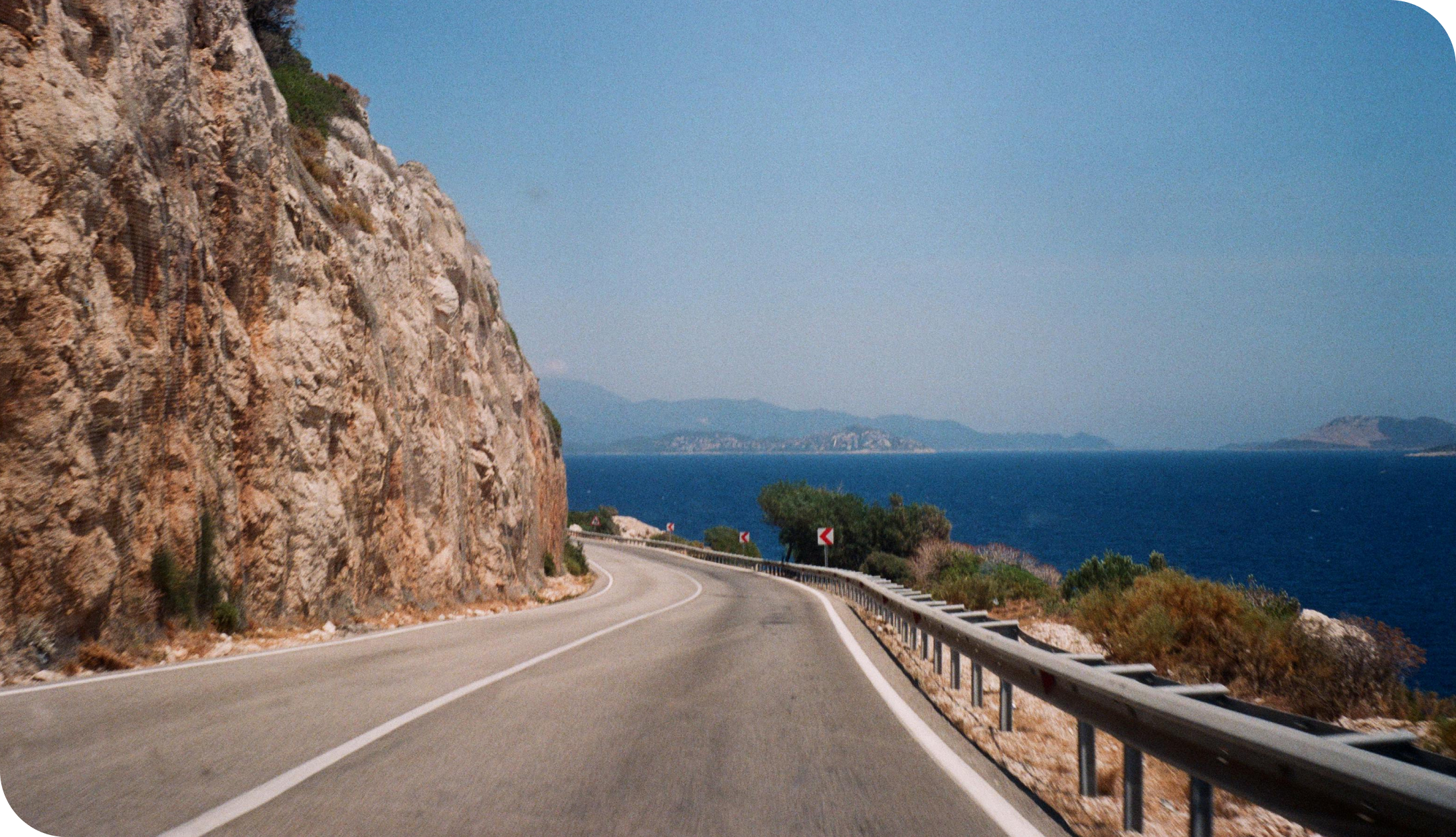
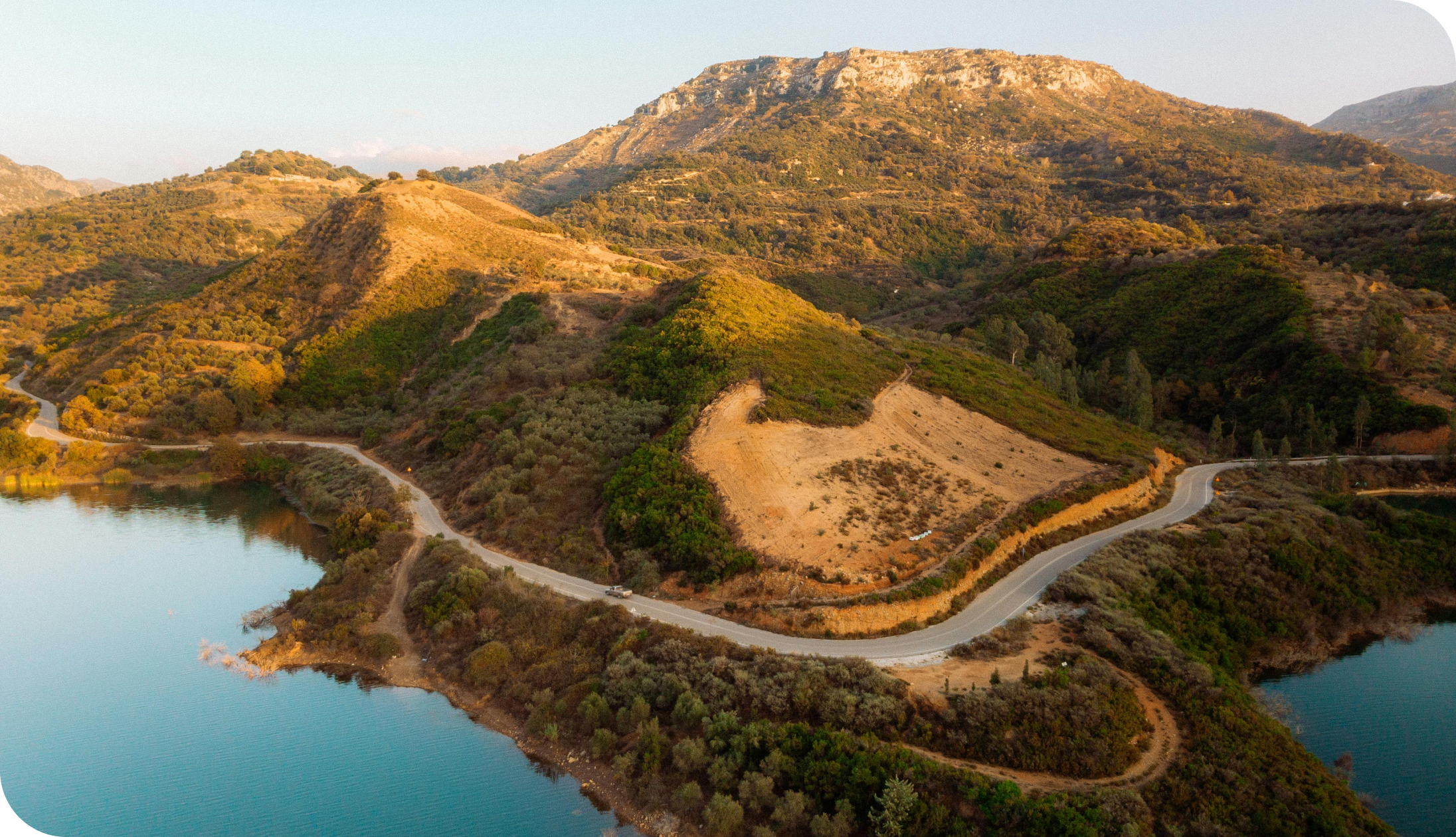
Mountain & Village Roads: A lot of Greece is mountainous, which makes for stunning scenery, and some challenging roads. In rural areas and on the islands, you’ll often find yourself on roads that twist and turn with hairpin bends, steep climbs, and descents. These roads can be quite narrow, sometimes effectively one lane wide (especially in older villages). Take it slow and be ready to encounter anything around the corner, wandering goats or sheep, a stopped vehicle, or a local coming the other way straddling the middle of the road. Use your horn sparingly but effectively: one practical use is to give a short honk when approaching a blind curve on a narrow mountain road, to let any oncoming traffic know you’re there (locals do this, especially if they’re in a larger vehicle). If you’re not used to mountain driving, use low gear to control your speed on long downhills (to avoid overheating your brakes) and don’t be afraid to drop to first gear on very tight uphill hairpins. In winter, mountain areas do get snow (yes, Greece has ski resorts!). If you’re visiting in the winter months and plan to drive in the highlands (e.g. around Mount Parnassus, Zagori, etc.), check if your rental car can be equipped with snow chains, in some cases chains or winter tyres are required by law during snow conditions. For most summer visitors this won’t be an issue, but it’s good to know.
Road Quality: The quality of road surfaces in Greece ranges from excellent to rough. Major routes and motorways are generally well-paved. But some smaller roads, especially on islands or in the countryside, might have potholes or uneven pavement. After heavy rains, potholes can appear, so keep an eye out on back roads. Also, some remote areas have gravel or dirt roads, if you’re venturing off the beaten path (say, driving up to a remote beach or archaeological site), double-check if the route is paved. Rental contracts often forbid driving on unpaved roads (and damage from doing so may not be covered), so stick to asphalt unless you’re certain it’s allowed and you have a suitable vehicle.
Signage and Navigation: On major roads, signs are generally good and are usually written in both Greek and English (or rather, the Greek place names are transliterated to Latin letters). For example, you’ll see signs for Athens marked “Αθήνα” and also “Athína” or “Athens”. This is immensely helpful. However, once you get into smaller towns or rural areas, some signs might be only in Greek. It’s useful to familiarise yourself with the Greek spelling of key destinations (or have a navigation app to follow). A few Greek words that might help: “ΕΞΟΔΟΣ” (Exodos) means Exit, “Κέντρο” (Kentro) means Centre (town centre), and “Λιμάνι” (Limani) means Port. Also note that some road signs (especially older ones) can be vandalised or missing, a quirky reality is that occasional signposts might have bullet holes or graffiti. Rely on route numbers and your map as much as on signs. A good sat-nav or map app (Google Maps, Waze, etc.) is your friend, they work well in Greece and can even warn of traffic jams or road closures.
City Traffic: Driving in Greece’s big cities like Athens or Thessaloniki is a world apart from the peaceful island roads. Athens in particular is known for heavy traffic and bold drivers. During rush hours (roughly 7:30-10:00 in the morning and 4:00-7:00 in the evening on weekdays), the main avenues can become very congested. Athens also has some peculiar traffic management schemes, for instance, there’s an odd/even license plate system on certain days in the very centre (the “Daktylios” ring) to control congestion and pollution. Rental cars are generally exempt from this rule on short term hires, but it’s usually not worth driving into central Athens if you can avoid it. The streets can be confusing, one-way systems in the old city are a maze, and parking is extremely scarce (and often requires resident permits, see Parking below). If you plan to explore central Athens, consider leaving the car at your hotel or a park-and-ride and using
public transport or taxis for city sightseeing. Thessaloniki’s city centre is also very congested, with a warren of one-way streets along the waterfront and city market area, it can be stressful to navigate for newcomers. Patience is key in city traffic; locals may appear aggressive (expect quick lane changes and scooters zipping around), but it’s often a kind of choreographed chaos that just takes a little getting used to. Stay alert, check your mirrors often (especially for motorbikes coming up either side), and don’t be afraid to let others merge, a little courtesy goes a long way amid the chaos.
Parking Etiquette and Tips: Parking in Greek cities and popular towns can be challenging. In city centres, you’ll usually find a mix of pay-and-display zones and permit-only areas. For example, in Athens, curb markings indicate the type of parking: Blue zones are typically for residents only (parking by local permit), while white zones or spaces marked for visitors allow short-term paid parking. Always check the signs nearby (often in Greek and English), they will tell you if you need to pay at a meter, the hours of enforcement, and the time limit. Generally, you pay at a kiosk or meter (newer systems also allow payment via smartphone app in Athens). Parking enforcement officers do patrol, if you park illegally or in a resident zone, you might come back to find a fine or even have your license plates removed (yes, the police can temporarily remove your number plates for certain parking violations in Greece!). In many towns, parking is free during certain hours (like overnight or Sunday) and pay-required during business hours, similar to the UK, but always confirm on local signage. Yellow lines or curb markings usually indicate no parking (often for loading zones, taxi stands, bus stops, or general no-stop areas). If you see a yellow line or a “No Parking” sign, don’t park there even if others might be doing so.
One quirk you might encounter, especially in busy areas or near popular attractions, is the presence of “unofficial” parking attendants. These are folks who wave you into a free curb space or a makeshift lot and then expect a small tip for “helping” you park or “watching” your car. They are not city officials, basically, it’s a form of hustle. In some cases they might even be somewhat territorial about street spots. It’s up to you, paying a euro or two can make them go away happy, and some locals do this to avoid any trouble (the implication being if you don’t tip and they’re nefarious, you might return to a mysteriously scratched car, though that’s likely rare). Use your judgment; if someone genuinely helped you squeeze into a tight spot, a token €1 is a nice gesture. If you park on your own and someone approaches for money, you’re not obliged to pay them, it’s a public street. In secured public car parks, you’ll pay an official attendant or machine, of course.
Whenever you park, never leave valuables in sight. Petty car theft isn’t rampant, but rental cars (often identifiable by a rental company sticker or a license plate from a known rental series) can be targets. Put bags in the boot before you reach your parking spot (so no one sees you stashing things), and take your important items with you. Always lock the car (common sense!). In some very tight streets, you may see locals fold in their side mirrors after parking, it’s a good idea to do the same in narrow lanes to avoid a bus or truck clipping your mirror. And remember, some streets in older areas are effectively one lane; people often park half on the sidewalk to leave room. This may be normal there, but follow local lead cautiously, parking on sidewalks is technically illegal, even if widely practiced, and you could get fined for it in city centres. Better to find an actual designated space or car park.
A tip for visitors: opt for a smaller car when hiring, if possible. Greek towns, especially on islands or in historical districts, have very tight roads and small parking spaces. A compact car will be much easier to manoeuvre and tuck into a spot (and usually cheaper to rent and fuel as well). Unless you truly need a large vehicle, going small will reduce parking stress.
Local Driving Etiquette: Greek drivers are generally experienced and, contrary to some stereotypes, often quite adept behind the wheel. In tourist areas, locals are usually patient with foreign drivers, understanding that you might be unsure of your route. However, there are a few behaviours and unwritten rules worth knowing:
- Use of Horn: Legally, the horn is only for emergencies, but culturally, you’ll hear it used more liberally. A quick tap of the horn can mean “heads up” if someone isn’t moving at a green light, or a light “beep” when going around a tight blind corner (as mentioned). You might also hear a brief honk from the car behind you if you hesitate too long after the light turns green, try not to take it personally, it’s often a gentle prod, not anger. Prolonged horn blasting out of frustration is less common (except maybe in the most gridlocked Athens traffic). As a visitor, it’s best to use the horn sparingly, but know that if you hear one, it could be directed at you or another nearby driver to draw attention to something.
- Flashing Lights: If a car behind you flashes their headlights, it usually means they intend to overtake or want you to move aside. This is common on highways, if you’re in the outside (left) lane and someone comes up fast behind, a flash is a polite request to let them by. Safely merge right when possible and let the faster car pass (better to let the speed demons go on their way). If an oncoming driver flashes at you, they might be warning of a speed trap, an accident, or livestock on the road ahead. Thank them by slowing down and staying alert.
- Tailgating: You may notice that some Greek drivers follow a bit closer than we’re used to in the UK. On highways, don’t be surprised if someone comes quite close before overtaking, it’s unfortunately a habit for some. The best response is to stay calm, maintain a steady course, and let them pass when they can. Never speed up to prevent someone from overtaking; that can cause road rage or dangerous situations. If you keep a cool head, they’ll go around when possible.
- Roundabouts: As mentioned, roundabouts can be tricky. The general rule nowadays is that traffic already in the roundabout has priority (as in the UK), unless there are signs indicating otherwise. However, in practice some drivers approaching a roundabout might not stop when they should. Always approach roundabouts with caution. If you’re in the roundabout, watch for cars that might dart in. If you’re entering, don’t assume the car coming around will yield for you (even if theoretically you have priority). It’s a bit of a mix until all roundabouts conform to one rule. Also, on multi-lane roundabouts, Greek drivers aren’t always strict about lane discipline, it’s not unheard of for someone in an inner lane to cut across to exit. Drive defensively: signal your intentions and double-check blind spots before you exit a roundabout.
- Thank-You Signals: Greek drivers, like many Europeans, will sometimes flash their hazard lights briefly as a “thank you” after you let them in or yield. For example, if you slow down to allow someone to merge in front of you and they can’t take a hand off the wheel to wave, they might blink their hazard lights two or three times. You can do the same, a quick hazard light blink or a hand wave is appreciated, though not absolutely expected.Patience and Assertiveness: Driving in Greece requires a mix of patience and mild assertiveness. In busy areas, you might need to edge out slowly to join traffic (because if you wait for a wide-open gap, you could wait forever). Make eye contact with other drivers, use your indicators, and make your move when it’s safe, generally someone will let you in. On the flip side, be patient if someone stops in the road ahead of you, double parking is common in towns (e.g., a driver might stop to drop someone off or run a quick errand). Usually they’ll wave an apology if they see they’re holding you up. Just exercise a bit of filotimo (Greek for respect/honor) on the roads, mutual understanding goes a long way.
City Driving Quirks: In Athens especially, you’ll notice a swarm of motorbikes and scooters weaving through traffic. They will squeeze between lanes and come up on your sides at lights. This is normal, just keep an eye on your mirrors and give them space. Also, traffic lights sometimes have a countdown timer in Athens (showing how many seconds until green), which is nice. Be aware of bus lanes (often marked and sometimes with a solid line, avoid driving or stopping in those, as cameras monitor them). Athens has some bus-only and taxi-only stretches. Thessaloniki has fewer scooters but a lot of one-way streets; sometimes to go a block in the direction you want, you have to loop around three sides of a square, don’t fight the system, just follow the one-ways even if it’s indirect.
Lastly, if you plan to drive in city centres, look out for Low Emission Zones or restrictions. Athens, for example, has considered measures to limit older, high-emission vehicles on certain days. As a tourist in a rental, this likely won’t affect you (rental cars are usually new and allowed), but always heed any sign that suggests vehicle restrictions. If in doubt, ask your rental company about any local driving rules in cities, they’ll know if there are areas you should avoid driving.
Rural Driving & Wildlife: Outside the cities, Greece can be very rural. It’s not uncommon to come across a herd of sheep or goats being led across a country road, there will usually be a shepherd or farmer not far behind. If you see animals, slow down and be prepared to stop, they have the right of way, effectively. Often the animals will move off the road in a minute, or the farmer will wave you through. Also watch for farm tractors or small three-wheeled trucks, especially on island roads, they go slow, but are usually easy to overtake when safe. Cyclists are increasingly common on scenic routes. Greek law requires at least 1.5 meters clearance when passing cyclists (a rule similar to other countries). If the road is narrow or winding and you can’t give that space, be patient and wait, do not try to squeeze by, as that’s dangerous and can incur heavy fines. Usually, you might find cyclists in groups, once you get past the group, you’ll be clear. They often ride single-file on busy roads to let cars overtake more easily.
Speed Bumps: Many villages and small towns use speed bumps (often painted yellow or with diagonal stripes) to slow cars down. These can be quite abrupt (Greeks call them “sakoufakia” or just speed bumps) and not always well-marked. If you see a sign with a bump symbol or “ΔΙΑΒΑΣΗ ΠΕΖΩΝ” (pedestrian crossing), assume there could be a raised crossing or bump. Hitting one too fast can give you and your suspension a jolt, or even scrape the bottom of the car, so keep an eye out. Generally, if you notice buildings indicating you’re entering a village, drop your speed even if there’s no obvious sign, there’s likely a 50 or 30 km/h limit with bumps ahead.
In summary, Greek roads can offer everything from smooth multi-lane highways to rugged cliffside tracks. The variety is part of the adventure. Take it slow and steady on the challenging roads, enjoy the views (safely!), and don’t hesitate to pull over in a safe place to let locals pass or to admire the scenery. A bit of adaptability and good humor goes a long way. As one travel writer put it, driving in Greece is the best way to find hidden gems, one minute you’re on a fast highway, the next you’re navigating a cobbled lane so narrow you have to fold in the mirrors. Embrace it as part of the journey. If a road seems too daunting (e.g. a super narrow alley in an old town), it’s okay to park outside the tricky area and walk in, locals often do the same.
Tips for UK Travellers Driving in Greece
For British drivers taking on the Greek roads, here’s a quick recap of special tips and reminders to ensure a smooth experience:
- Remember to Drive on the Right: It sounds obvious, but it’s the #1 habit change. Many UK drivers find it helpful to give themselves a little reminder each time they set off. One trick: put a sticky note on the dashboard with an arrow pointing right or the word “RIGHT!”, especially useful when you’re starting fresh in the morning or pulling out onto a quiet road with no other traffic to cue you. Also, when turning at junctions, consciously think about ending up on the right-hand side of the street. After a day or two, it will become more natural. Until then, don’t be embarrassed about using reminders, safety first.
- KM/H, Not MPH: All speed limits in Greece are in kilometres per hour, and your rental car’s speedometer will default to km/h. If you’re driving your own UK car in Greece, the speedo shows mph prominently, so use the inner or smaller km/h numbers to keep track. To calibrate your mind: 50 km/h is ~30 mph, 80 km/h ~50 mph, 100 km/h ~62 mph, 120 km/h ~75 mph. It’s easy to unintentionally speed or go too slow if you’re not used to km/h, so take a moment to note the key conversions or set the car’s digital display to km if possible.
- “UK” Sticker / Euro Plates: If you’ve driven your own car over from the UK, make sure you have a valid UK country sticker on the back of your car (or that your number plate has the UK identifier with the Union Jack). Greece, like all EU countries, requires foreign cars to display country-of-origin markings. (Post-Brexit, the “GB” sticker is no longer accepted, it must say UK now.) Rental cars in Greece will have Greek plates, so you don’t need to worry about this for rentals, this is only for those on a road trip with their personal vehicle.
- Headlight Converters: If you brought your right-hand drive UK car to Greece, you’ll need to adjust your headlights for driving on the right. UK headlights are angled left (to light up the shoulder and not blind oncoming traffic in the UK), which in Greece would unfortunately shine directly into oncoming drivers’ eyes. Use stick-on headlamp beam deflector patches on your headlights, or some modern cars have an internal switch to flatten the beam. Do this as soon as you arrive, it’s required and very important for safety at night. If you’re in a Greek rental car, no worries, those are built for right-side driving already.
- Sat-Nav & Apps: A good navigation system can be a lifesaver for finding your way, especially in cities or on complex road networks. Google Maps and Waze work well in Greece. Just be mindful of your mobile data, since Brexit, not all UK phone plans offer free EU roaming. Check your plan; if data is costly, download offline maps of Greece on Google Maps (or use an app like Maps.me) while you have Wi-Fi, so you can navigate without using data. If you do have an inclusive data plan, great, you can use live traffic info too. Important: if using your phone for navigation, mount it in a holder. Handling your phone while driving is illegal (as discussed), so set your destination before you start, or pull over to change it. Also, consider a car charger or power bank, as using GPS can drain battery. Road signage is decent for major routes, but in cities and villages it can get confusing, a sat-nav helps prevent those last-second lane changes or missed turns.
- Fuel in Greece: Unleaded petrol (gasoline) in Greece is usually 95 octane and often simply labeled “95” or “Αμόλυβδη 95”, sometimes with “Unleaded” written as well. Higher octane (98/100) is available at many stations too. Diesel is commonly labeled “Diesel” or “Πετρέλαιο” (petrelaio), usually it’s obvious, and the pump nozzle for diesel may be black while petrol is green (note: in the UK it’s the opposite, green for unleaded, black for diesel, so pay attention to the labels to avoid misfuelling). If you rent a diesel car, it might have a sticker near the fuel cap or on the key fob saying “Diesel”, double-check before filling. Fuel is sold by the litre. As of recent years, petrol prices in Greece have been around €1.6–€1.8 per litre (they fluctuate, of course), which is roughly £1.40-£1.60/L, similar to or a bit higher than UK prices. One big difference: many petrol stations in Greece are not self-service, especially in smaller towns. An attendant will often come to fill your car for you. Just tell them “Full, please” (“Γεμάτο παρακαλώ”gemato parakalo in Greek) or specify an amount. Tipping the petrol attendant isn’t mandatory, but locals sometimes round up the bill or leave small change. Also, note that in rural areas, petrol stations might have limited opening hours (often closed by 7 or 8 pm, and some closed Sunday). On major highways and in cities, you’ll find 24-hour stations, but if you’re heading to a remote island village, don’t let your tank run too low, fill up when you have the chance. It’s a good practice to keep at least quarter of a tank, especially on islands, since stations can be sparse.
- EHIC/GHIC Card: Don’t forget to pack your European or Global Health Insurance Card (if you have one). The EHIC/GHIC entitles UK travellers to emergency state healthcare in Greece on the same terms as locals. This can be a lifesaver if you fall ill or have an accident. Note that it won’t cover private hospitals or things like medical repatriation, but it’s still an important safety net. Ensure your card is in date (if you have an old EHIC, you can replace it with the free GHIC). And of course, it’s strongly recommended to have travel insurance as well, including cover for medical and for your rental car excess if you haven’t bought a separate policy. Hospital bills for anything serious can mount up, so insurance and the GHIC together provide comprehensive protection. Hopefully you’ll never need it, but better safe than sorry.
- Emergency Numbers: The Europe-wide emergency number 112 works in Greece for police, ambulance, and fire, just like 999 in the UK (operators can usually speak English). Save this in your phone contacts. Additionally, Greece has a dedicated Tourist Police in many areas, they can be reached at 171 (they speak English and can help with issues specific to tourists, from crime reports to general assistance). It’s a good idea to note down the number of your car rental’s roadside assistance as well, most rentals include a 24/7 emergency roadside help; the number will be on your rental agreement or keychain.
- With these tips in mind, most UK drivers find that after the first day or two, driving in Greece becomes second nature. You’ll adjust to the “feel” of the roads and start enjoying the freedom of having a car, whether it’s finding a hidden beach or making an impromptu detour to a picturesque mountain village. Take your time, drive defensively, and remember that you’re on holiday, no need to rush. If you do take a wrong turn (it happens to all of us), just find a safe spot to turn around or let your nav reroute, sometimes those wrong turns lead to the best little discoveries!
Enjoy the Journey, and Final Preparations
Driving a hire car in Greece is one of the best ways to truly experience this beautiful country. In a single trip, you can go from ancient ruins in Athens to the blue seaside of the Aegean, from rugged mountains to olive groves and beachside tavernas, all on your own schedule. By understanding the local laws and customs and preparing the right documents, you’ve set yourself up for a successful road trip. Now, a few final preparations and you’ll be ready to roll.
Before you set off, do a quick checklist: valid driving licence (and IDP if needed)? Passport? Rental contract? Insurance papers? All packed and accessible, check! Adjust your mirrors and seat, get your navigation queued to your first destination, and remember it’s right-hand traffic, you’re good to go. Greece awaits with its scenic coastal highways and charming country roads.
One more pro-tip: secure your car hire excess insurance in advance if you haven’t already. Even the most careful drivers can have a minor mishap, a stray branch that scratches the paint, a stone chip on the windscreen from a passing truck, or a tight parking spot scrape. Those little incidents could cost you hundreds if you’re liable for the rental excess. With a separate excess insurance policy in place, you won’t have to worry. Gigasure’s Car Hire Excess Insurance for Greece is tailored for travellers like you, taking the financial stress out of any dings or dents. It covers the big excess charges that come with Greek rental cars, and does so at a low cost compared to what the rental desk would charge. In other words, it lets you focus on enjoying the drive, not stressing over “what if” scenarios.
So, as you map out your Greek adventure, take a moment to get a quick quote for Gigasure’s Car Hire Excess Insurance for Greece, it’s fast and could save you a lot of money and hassle. With that sorted, you can set off into the Greek sunset with total peace of mind, knowing you’re protected.
Καλο ταξίδι (kaló taksídi, “have a good journey”)! Safe travels, and enjoy every moment on the Greek roads. With the right prep and the proper cover in place, you’ll have a fantastic, worry-free driving adventure in Greece. Now turn the key, hit the road, and let the memories begin!